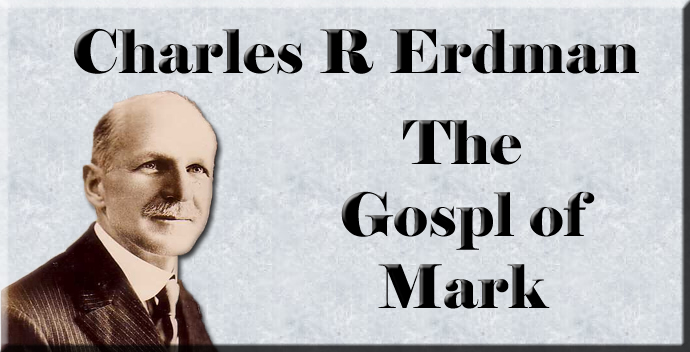
The Gospel of Mark
By Charles R Erdman
Chapter 6
|
SECTION VI. The Resurrection. Ch. 16:1-8
The resurrection of our Lord is the fundamental fact of our faith. If it is not true, Christianity is a stream without a source, an effect without a cause. While no one saw the Saviour rise, no event of history is better attested. Among the familiar proofs are the empty tomb, the appearance of Jesus to his followers, and the history of his Church. Of the circumstances attending this supreme event, different ones are related by each Gospel writer, and with a variety of detail. Mark gives a vivid picture of the women who visit the place of burial and find that the body of Jesus is gone. Their errand is one of love but also of unbelief; the Master promised to rise on the third day; but now, early on that Sunday morning, they are approaching the tomb, expecting to anoint his dead body. They are anxious as well as sorrowful, wondering how the stone may be removed to give them access to the sepulcher. As is so often the experience in life, they find that the dreaded difficulty disappears before it is encountered: "they see that the stone is rolled back." As they enter, they find that the sepulcher is empty; yet not empty, for an angel is present to give the astonishing explanation: "Be not amazed . . . he is risen; he is not here." There is no other explanation of that empty tomb. The supposition that the body had been stolen, or that Jesus never really had died, or that the disciples imagined he had risen, or that they invented the falsehood of a resurrection — no one of these can be accepted except by prejudiced skepticism or by childish credulity. Knowledge, however, involves responsibility. Those who know of a risen Christ must be his witnesses. "But go, tell his disciples and Peter." They all need the message, and it is a mark of special grace to single out Peter whose heart is heaviest of all. Then a promise is added: "He goeth before you into Galilee: there shall ye see him." Lastly, there is just a word of reproof: "As he said unto you." Christ is risen, he will some day appear; do we all believe and remember his words? The whole scene is one of mystery and surprise: the opened sepulcher, the empty tomb, the angel messenger, the assurance of a risen Lord. No wonder that the women flee from the tomb in astonished silence, "for they were afraid." Is it probable that the Gospel of Mark originally ended with these words? It is possible; but surely no one should close the gospel story until there has come, in his own life, a comforting, confident belief in the resurrection, until in fact one knows that he has met with the living Christ.
|
|
 |
 |
|
|
|
-
Site Navigation
 Home
Home What's New
 Bible
Bible Photos
 Hiking
 E-Books
 Genealogy
 Profile
Free Plug-ins You May Need
Profile
Free Plug-ins You May Need
 Get Java
.png) Get Flash
Get Flash Get 7-Zip
 Get Acrobat Reader
 Get TheWORD