|
|
|
 |
Townsend's Warbler
|
| Dendroica townsendi | |
A bird of the Pacific Northwest, the Townsend's Warbler nests in coniferous forests from Alaska to Oregon. It winters in two distinct areas: in a narrow strip along the Pacific Coast, and in Mexico and Central America.
Interesting Information
-
The Townsend's Warbler hybridizes with the Hermit Warbler where their ranges overlap in Oregon and Washington. The hybrid zones are rather narrow and appear to be slowly moving, with the more aggressive Townsend's Warbler displacing the Hermit Warbler.
-
On the wintering ground in Mexico, the Townsend's Warbler feeds extensively on the sugary excretions of scale insects. Although the warbler usually forages in the tops of trees, it will use patches of the honeydew-producing insects at whatever height it finds them. It will defend territories around trees infested with the insects against other Townsend's Warblers as well as other bird species.
-
The male Townsend's Warbler begins to sing before it leaves its wintering grounds.
-
Sometimes a female Townsend's Warbler will partially construct a nest in one tree, then move all the materials to another tree and finish the nest there.
Description
Adult Description
-
Small songbird.
-
Chest and face yellow.
-
Stripes down sides of chest.
-
Two white wingbars.
-
Dark face patch.
-
Dark crown.
-
Black in throat.
-
Length Range: 12-13 cm (4.75-5 in)
-
Weight: 9 g (0.3 oz)
-
Size: Very Small (3 - 5 in)
Sex Differences
Male Description
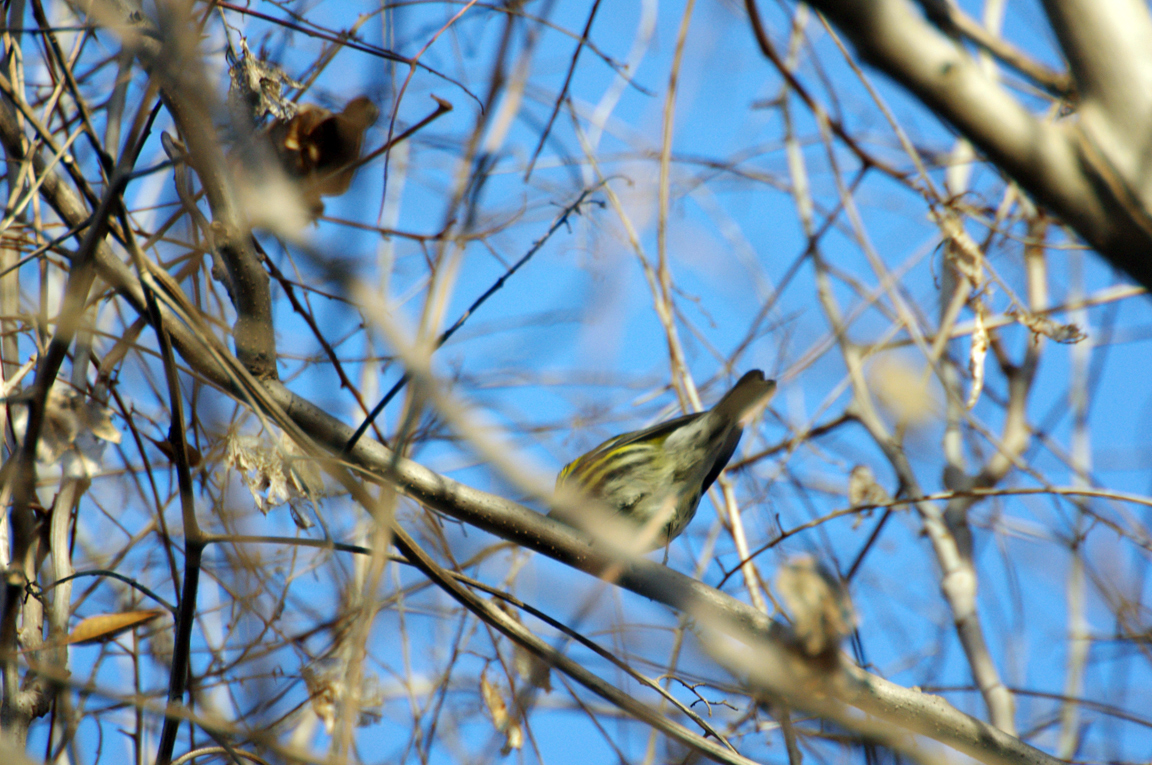
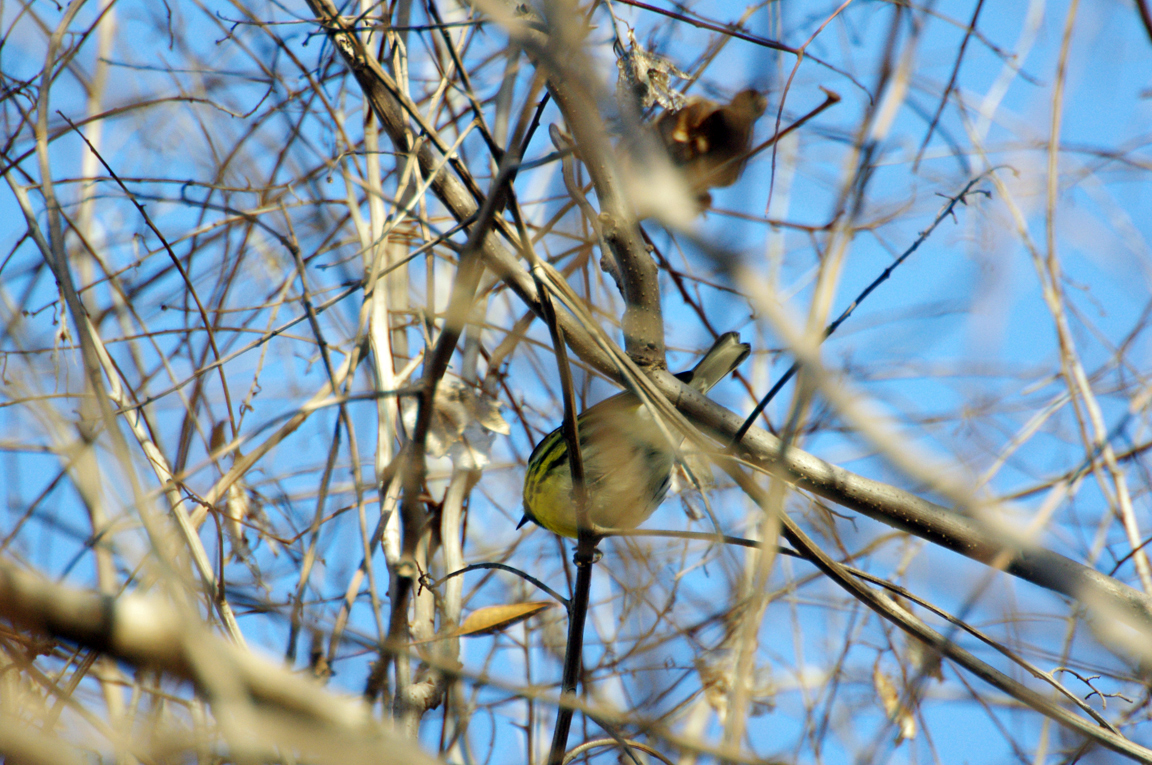
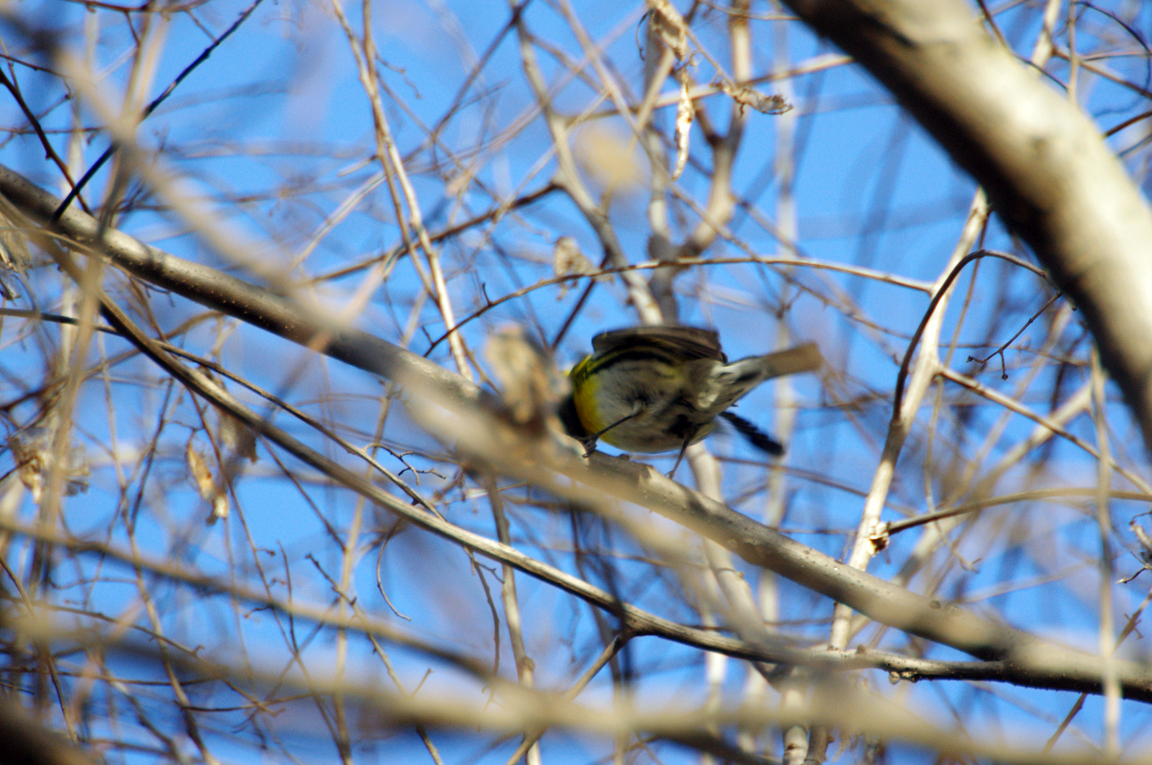
Crown and throat black. Face yellow. Black cheek patch with yellow crescent under eye. Black streaks extend from throat down sides. Chest and sides yellow. Belly and undertail white. Back olive green with black streaks or spots. Two white wingbars.
Female Description
Crown olive-green with thin black streaks. Cheek patch olive. Cheek, throat, chest, and sides yellow. Some black markings in throat. Back olive with thin black streaks. Belly and undertail white. Two white wingbars.
Immature
Immature similar to adult female. Immature female with indistinct streaking on back and without black in throat.
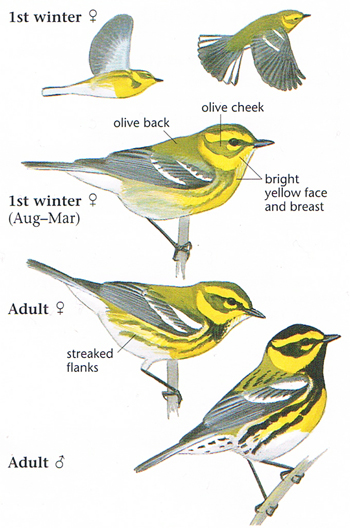
Photo taken from: The Sibley Field Guide by David Allen Sibley
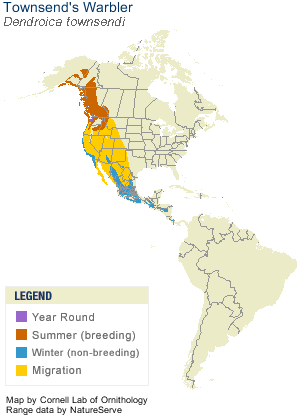
© 2003 Cornell Lab of Ornithology
|
Habitat |
|
|
Behavior |
|
Gleans insects from leaf surfaces and needles in upper third of tree canopy. Hawks insects and hover-gleans. |
|
Food |
|
Insects and honeydew excreted by scale insects. |
Taxonomy
| Kingdom: | Animalia |
| Phylum: | Chordata |
| Subphylum: | Vertebrata |
| Class: | Aves |
| Order: | Passeriformes |
| Family: | Parulidae |
| Genus: | Dendroica |
| Species: | Dendroica townsendi |
Similar Species |
|
|
Bird Sound |
|
Song a series of buzzy notes on one pitch, followed by several on different pitch, usually rising: "Zee-zee-zee-zee-dee-du-dee." |
|
Eggs look like this |
|
Photo taken from: ARCTOS Collaborative Collection Management Solution |




.png)


|
|
Sources Used To Construct This Page |
|||
|
||||
 |
 |
 |
 |
|
| All photos and videos © Rick Swartzentrover - Free for non-profit use. | ||||