|
|
|
 |
Red-breasted Merganser
|
| Mergus serrator | |
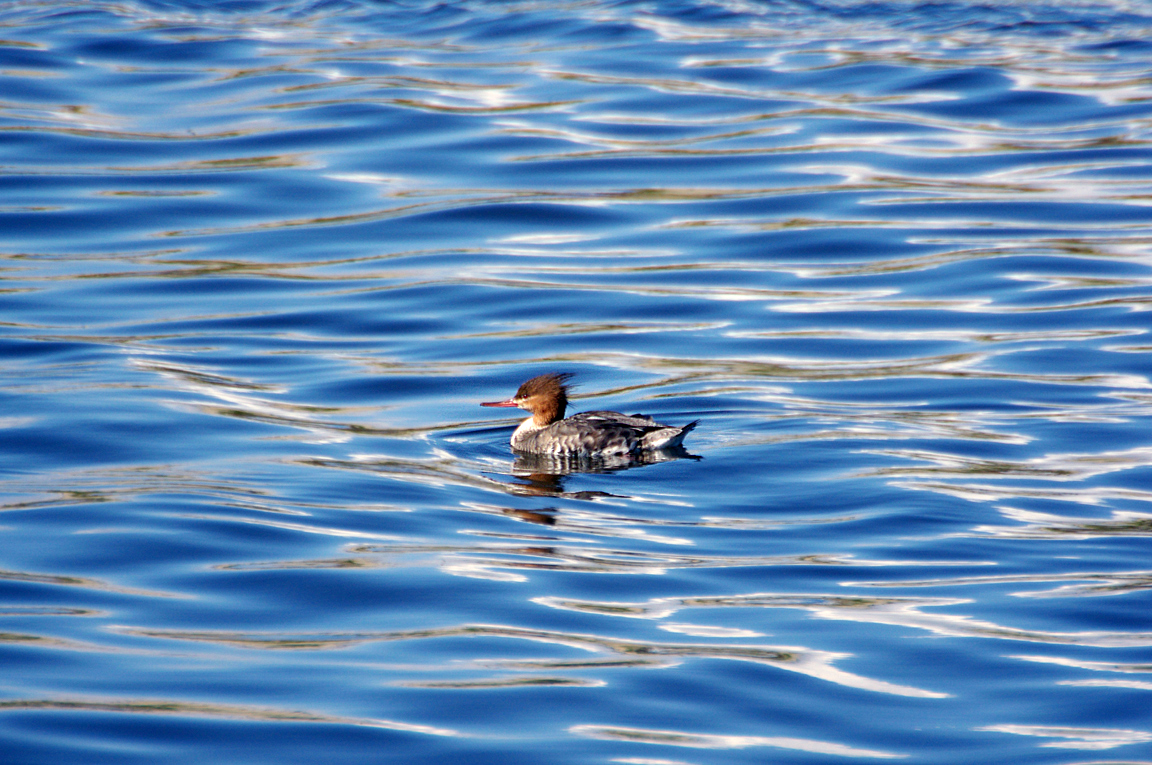
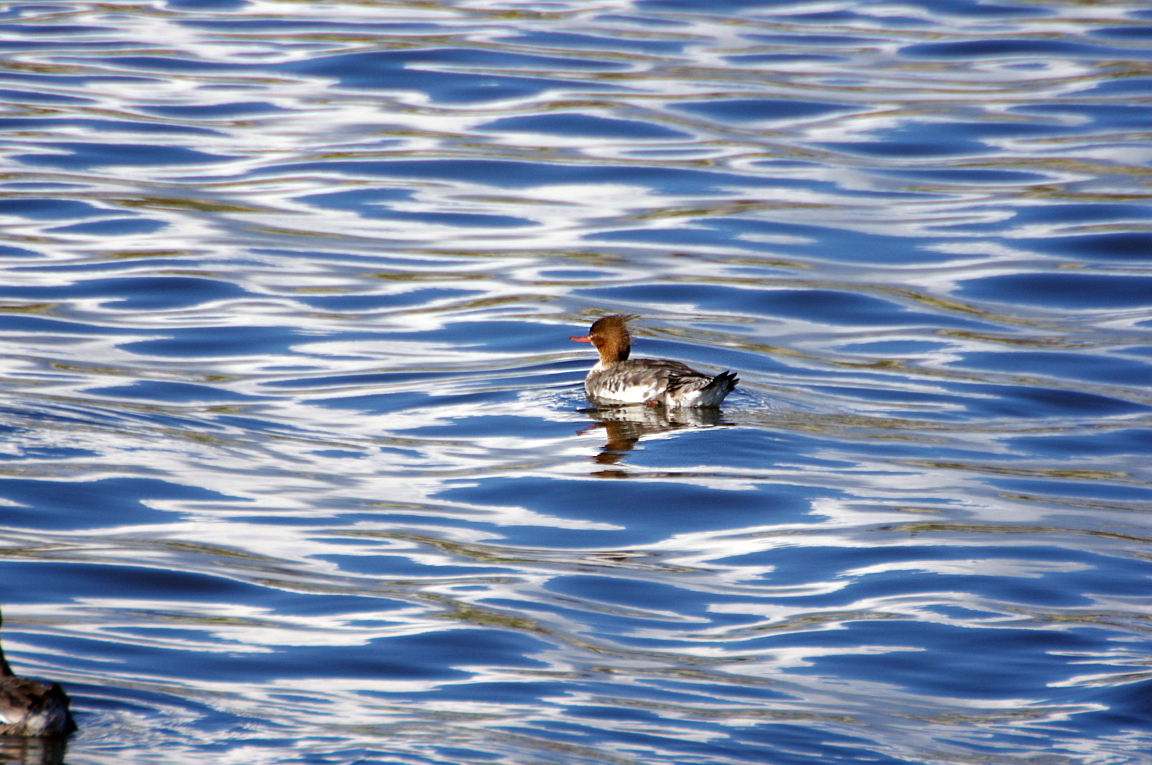
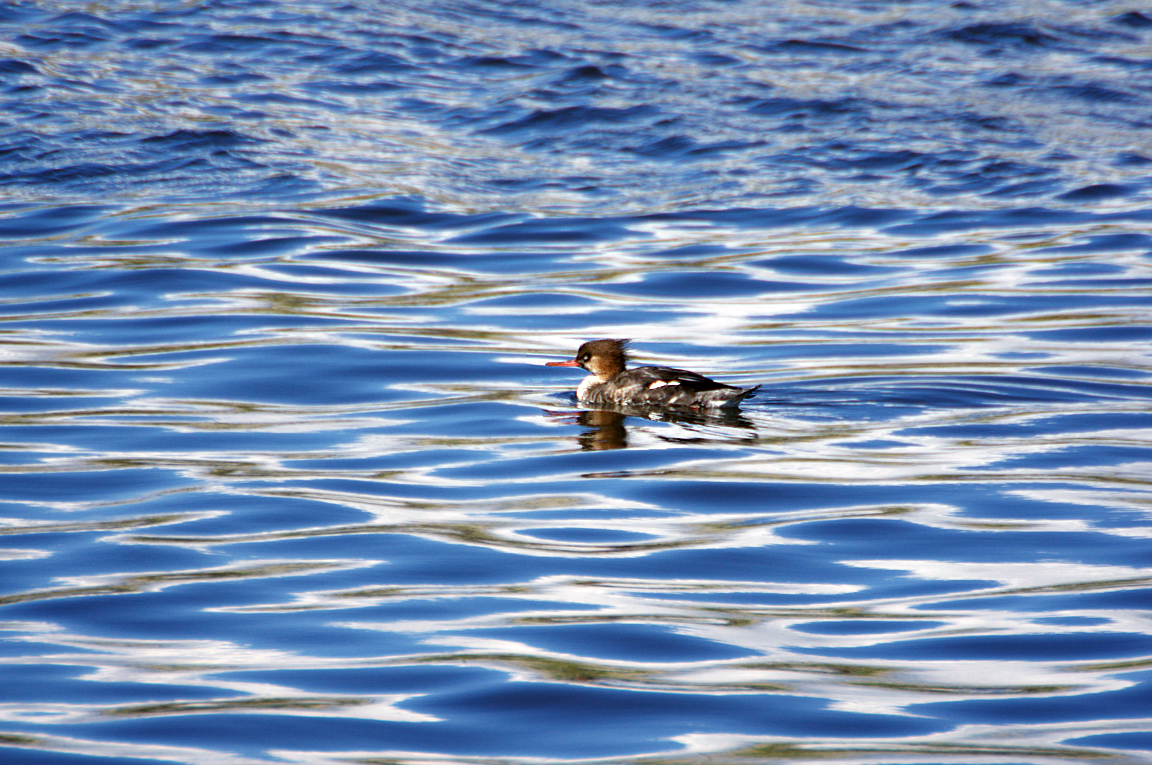
A large diving duck with a long thin bill, the Red-breasted Merganser is found in large lakes, rivers and the ocean. It prefers salt water more than the other two species of merganser.
Interesting Information
-
The Red-breasted Merganser breeds farther north and winters farther south than the other American mergansers.
-
The Red-breasted Merganser was first described in 1758 by Carolus Linnaeus, Swedish botanist, physician and zoologist.
-
It prefers salt water more than the other two species of merganser.
-
A group of ducks has many collective nouns, including a "brace", "flush", "paddling", "raft", and "team" of ducks.
Description
Adult Description
-
Large, thin diving duck.
-
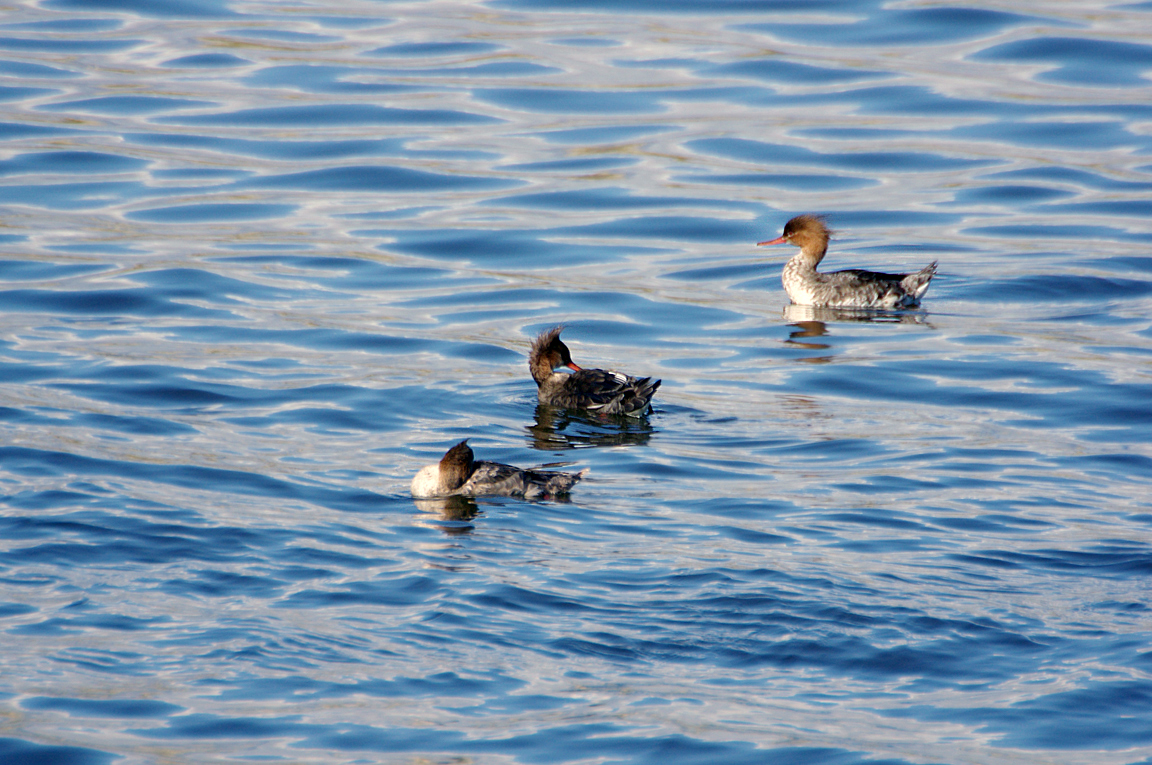
Long, thin, orange to red-orange bill.
-
Shaggy crest on back of head.
-
White patches in wing visible in flight.
-
Male with gray sides, dark reddish chest, white neck, and iridescent green head.
-
Length Range: 41-66 cm (16-26 in)
-
Weight: 1134 g (40 oz)
-
Size: Large (16 - 32 in)
-
Color Primary: Gray, Sheen or Iridescence
-
Underparts: White
-
Upperparts: Black
-
Back Pattern: Solid
-
Belly Pattern: Solid
-
Breast Pattern: Striped or streaked
Sex Differences
Male Description
Breeding (Alternate) Plumage
Head iridescent greenish black. Neck white. Chest deep rusty speckled with black. Back dark with long white patch along wings. Tail gray. Outer part of wings black. Bill scarlet-orange. Eyes red.
Nonbreeding (Basic) Plumage
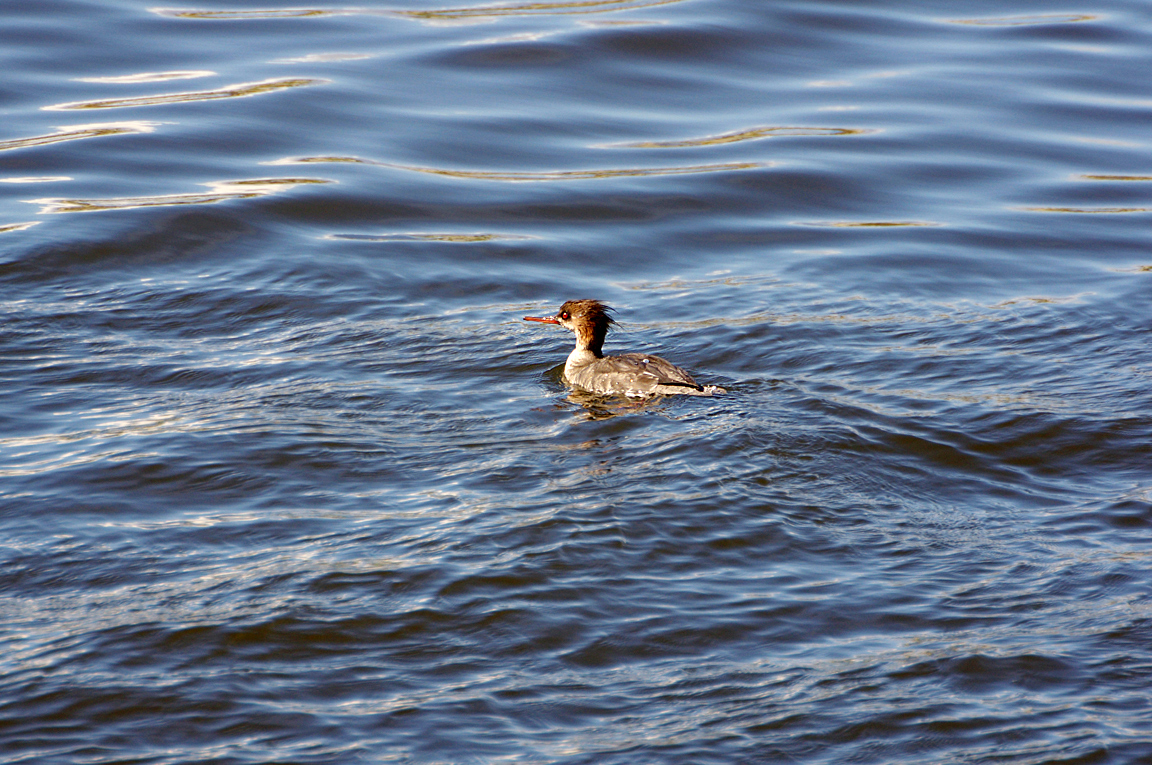
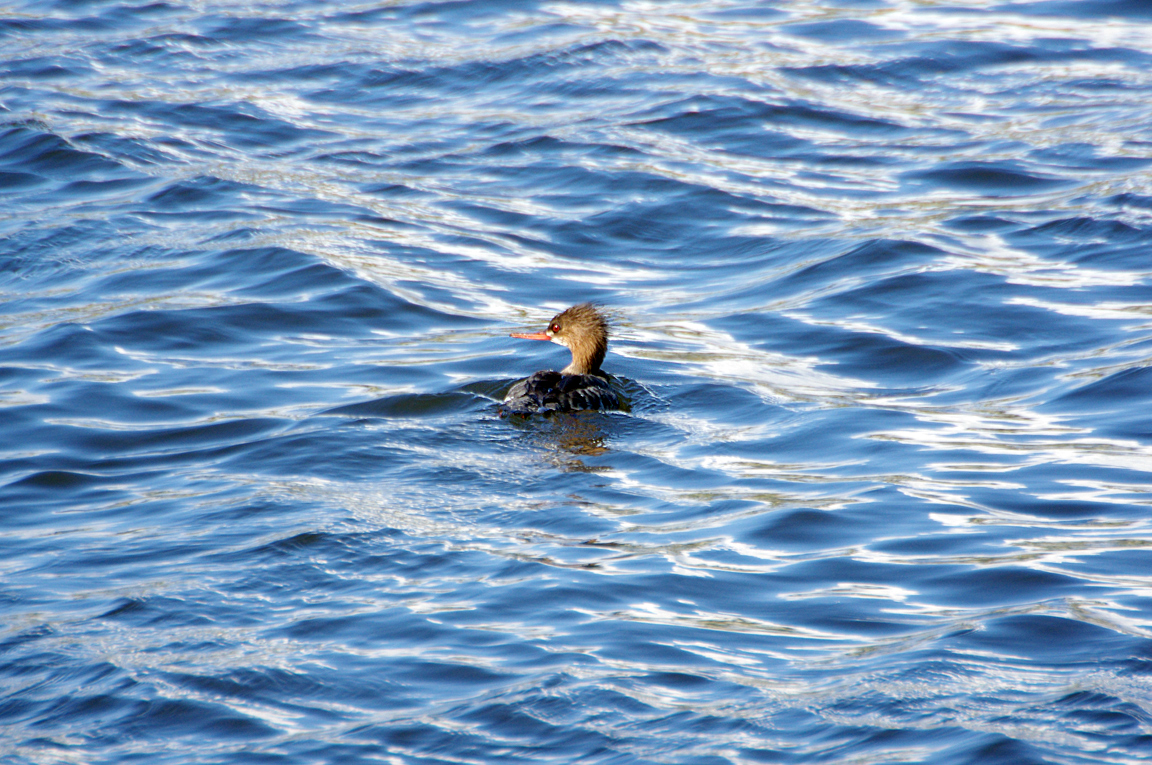
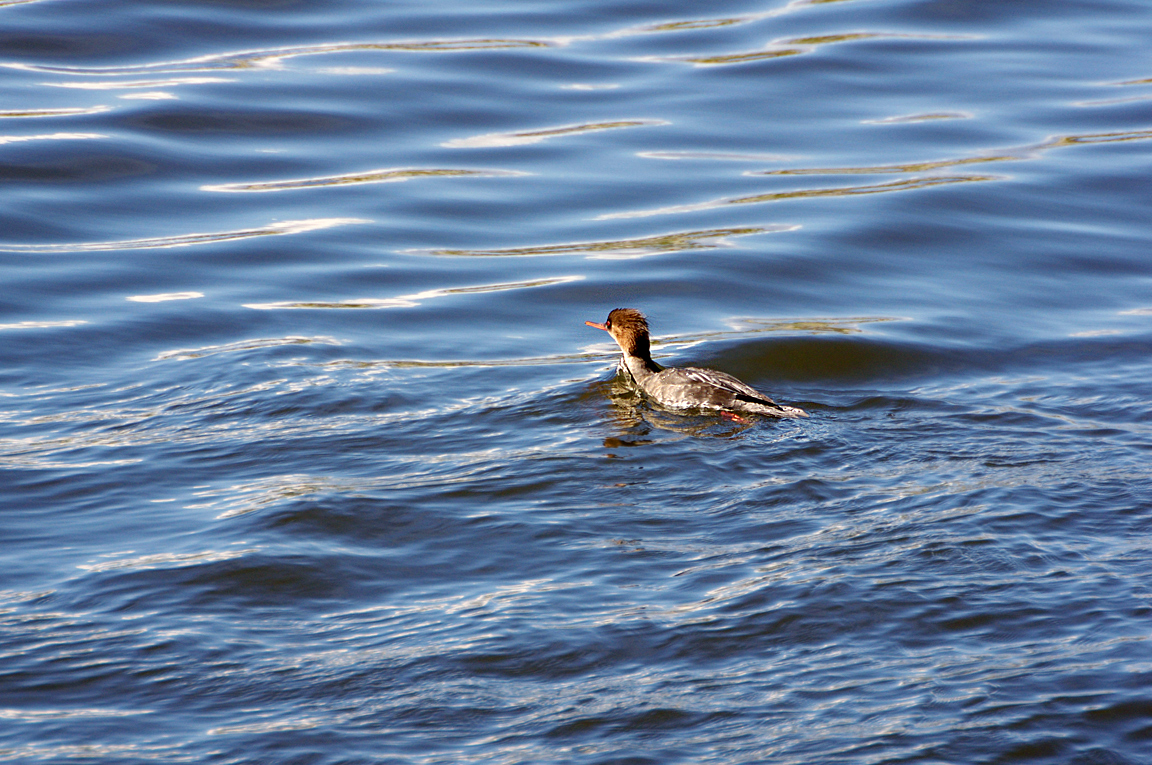
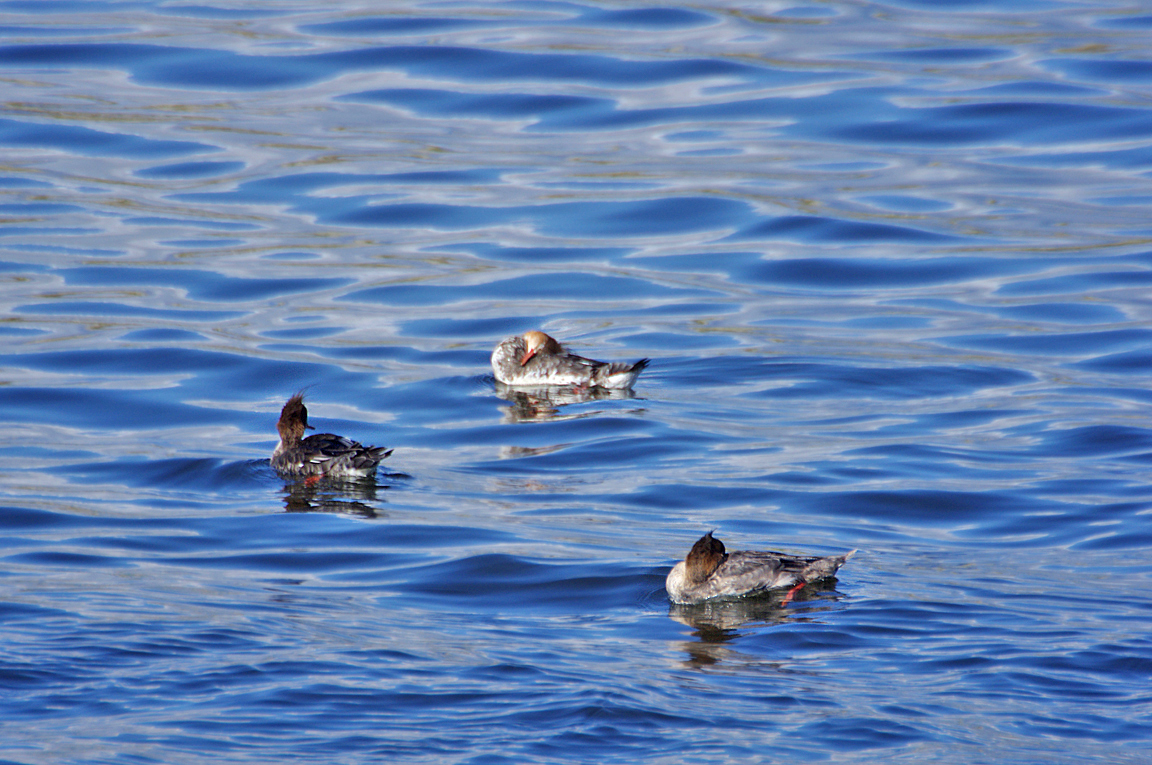
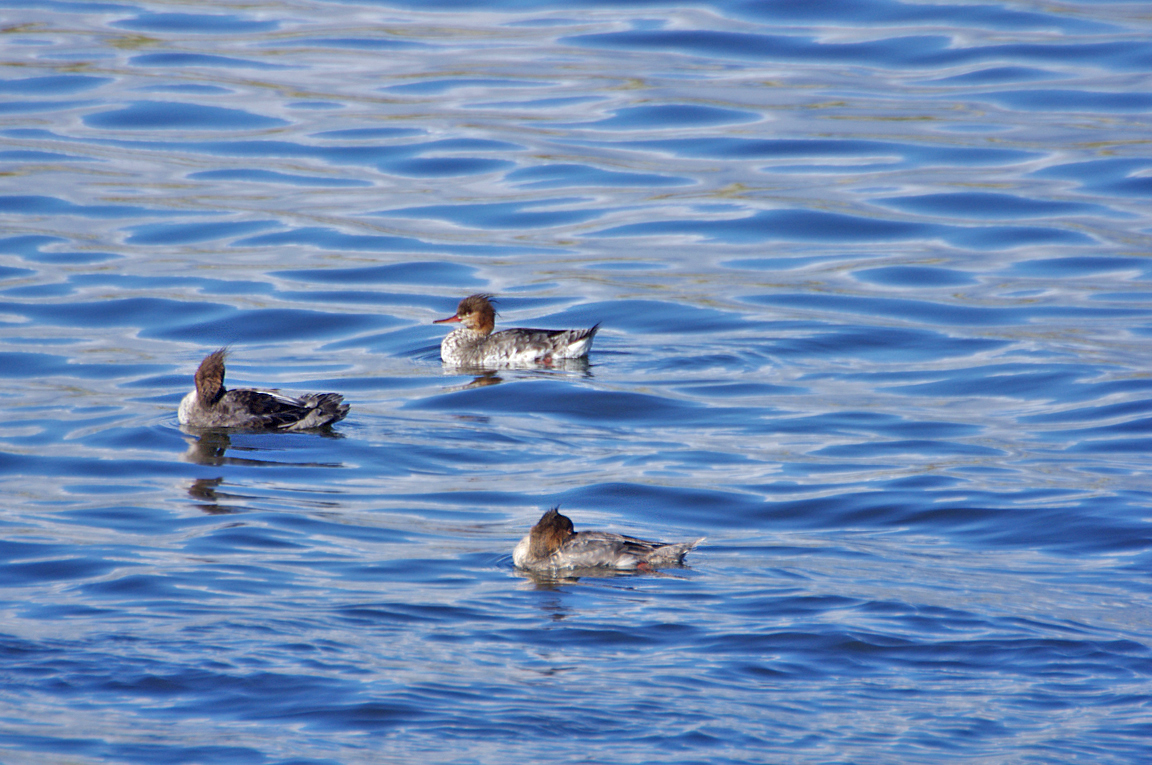
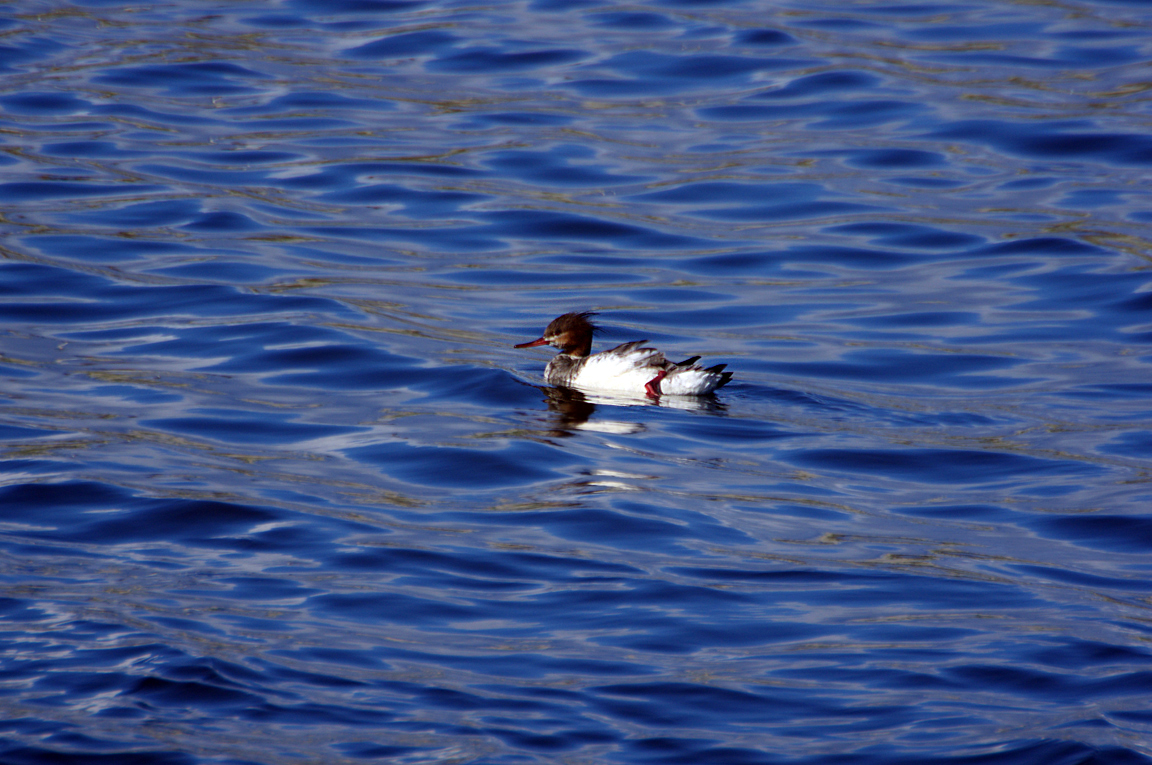
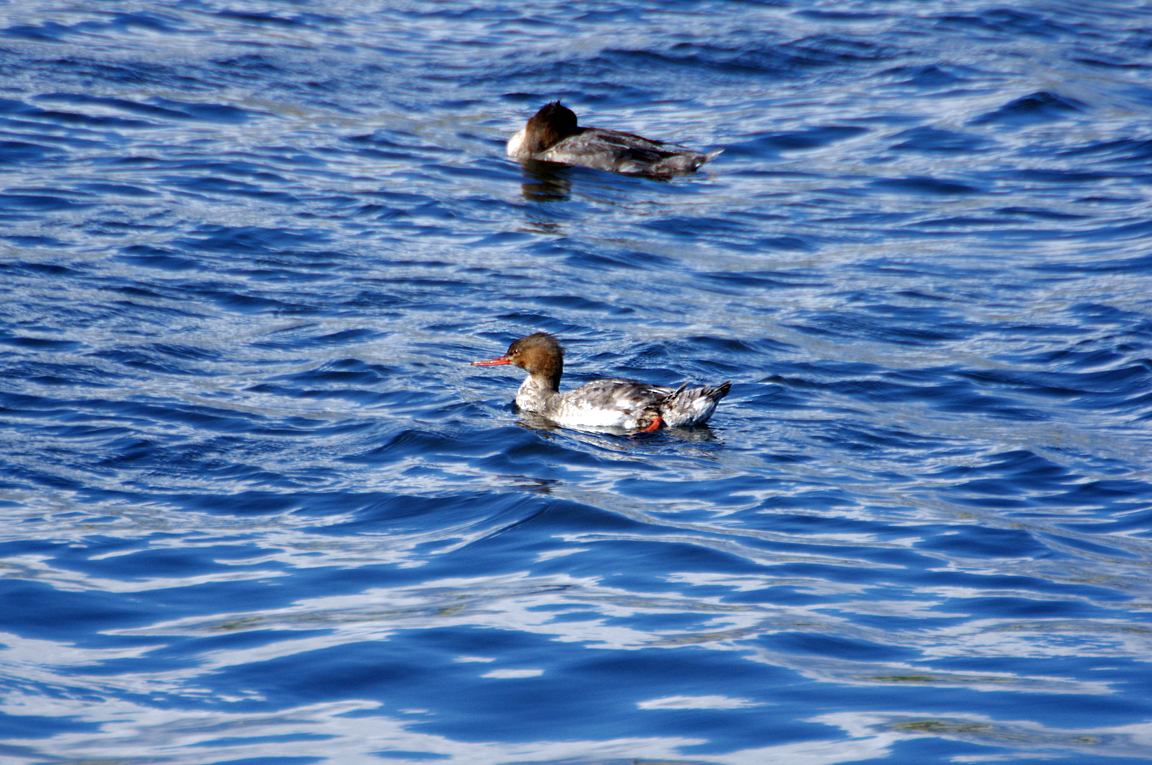
Head rusty brown with long, ragged double crest. Chin pale or gray. Breast, back, wings and tail slaty gray. Belly and flanks white. Bill scarlet-orange. White patch in wing visible in flight. Like female, except has less white on chin, darker back, and wing with larger white patch.
Female Description
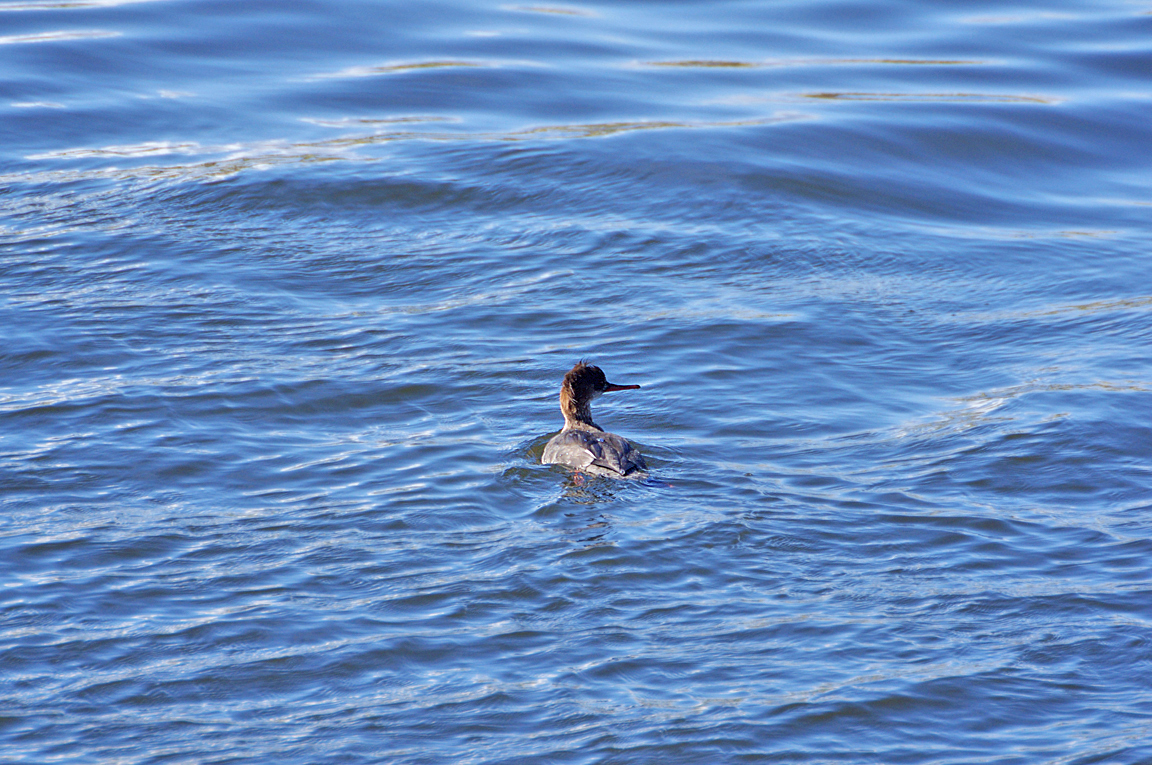
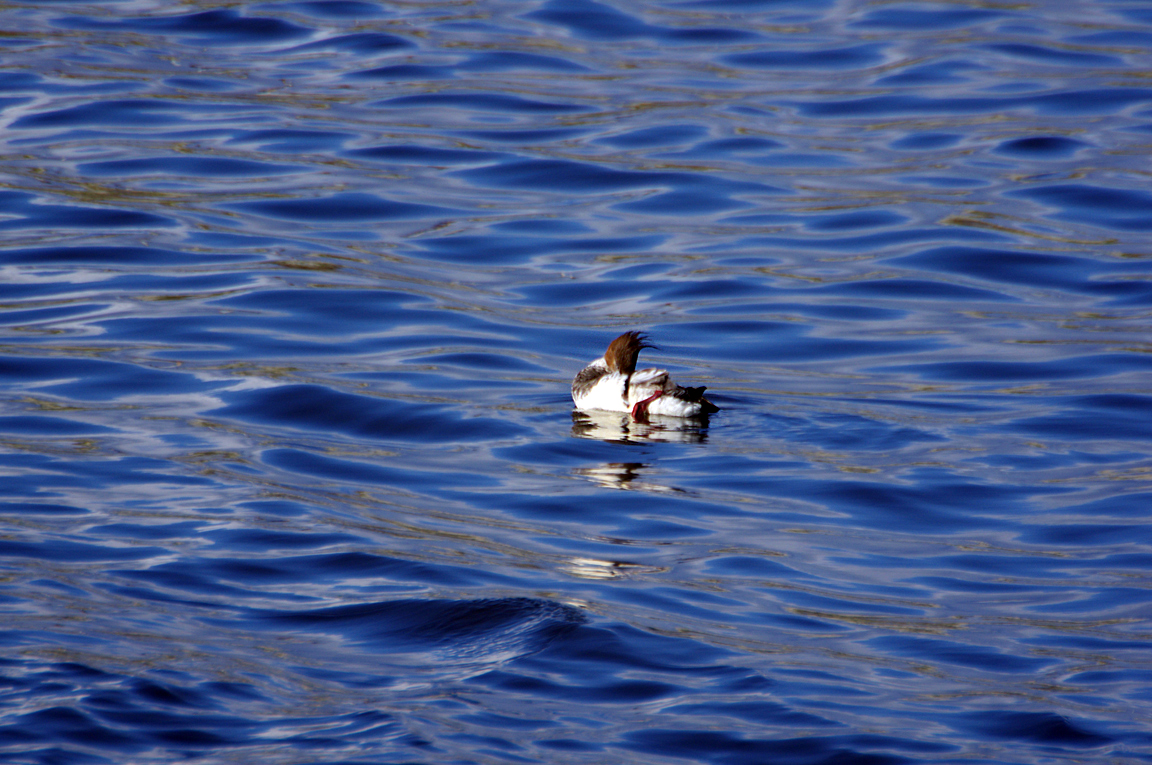
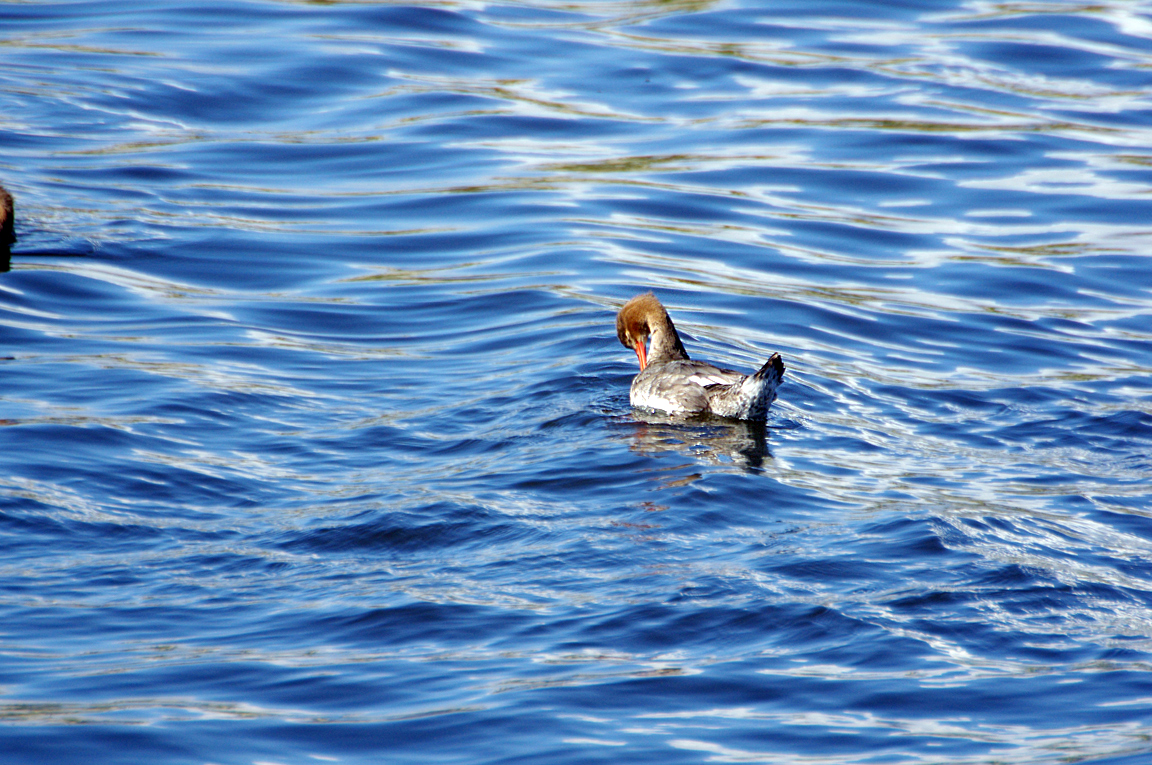
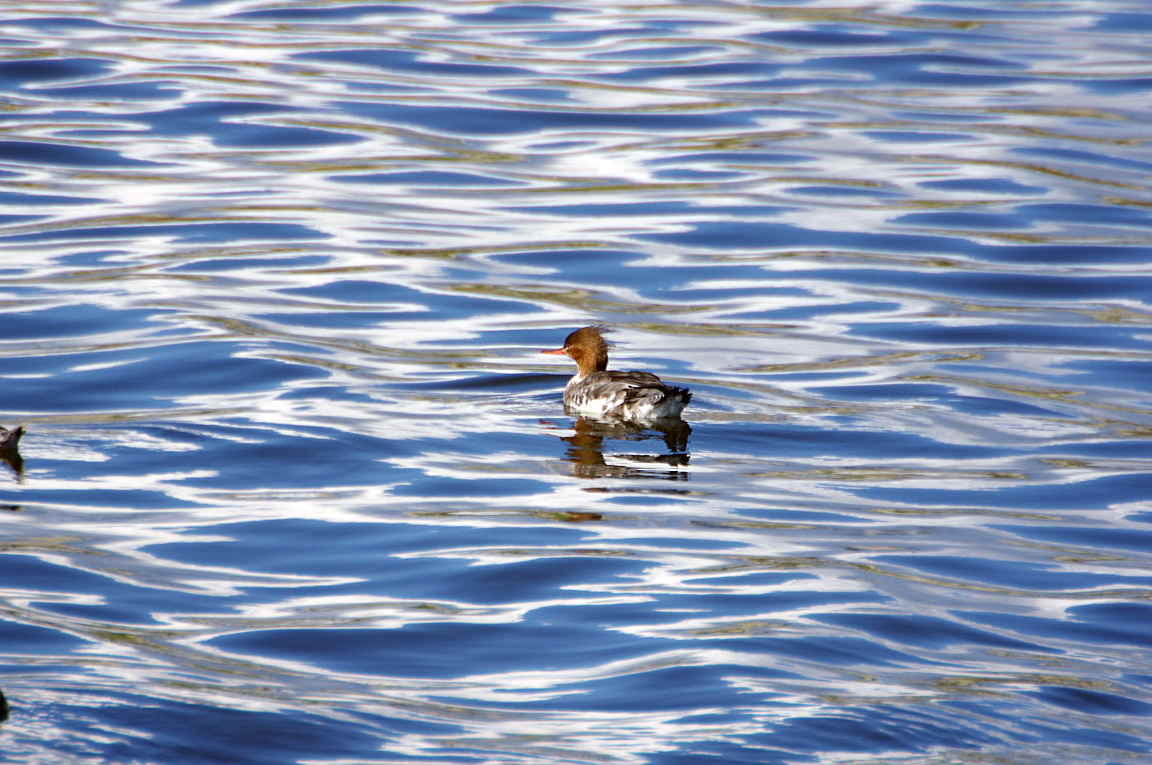
Head rusty brown with long, ragged, double crest. Chin dark or pale, gradually merging with chest color. Breast, back, wings and tail slaty gray. Belly and flanks white. Bill scarlet-orange. White patch in wing visible in flight.
Immature
Immature resembles adult female.
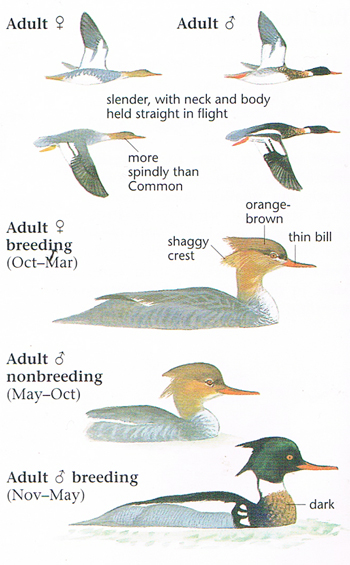
Photo taken from: The Sibley Field Guide by David Allen Sibley
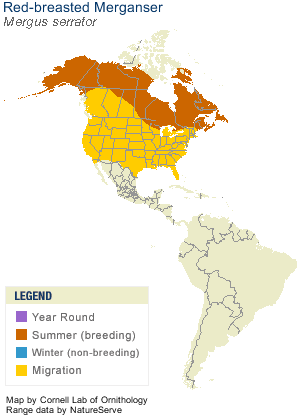
© 2003 Cornell Lab of Ornithology
|
Habitat |
|
Wooded lakes and tundra ponds; found mainly on saltwater during winter. |
|
Behavior |
|
Dives underwater to catch prey. |
|
Food |
|
Mostly fish; also crustaceans, insects, and tadpoles. |
Taxonomy
| Kingdom: | Animalia |
| Phylum: | Chordata |
| Subphylum: | Vertebrata |
| Class: | Aves |
| Order: | Anseriformes |
| Family: | Anatidae |
| Subfamily: | Anatinae |
| Genus: | Mergus |
| Species: | Mergus serrator |
Similar Species |
|
|
Bird Sound |
|
Silent except in courtship when male makes a cat-like "yeow, yeow." Female makes a harsh "gruk." |
|
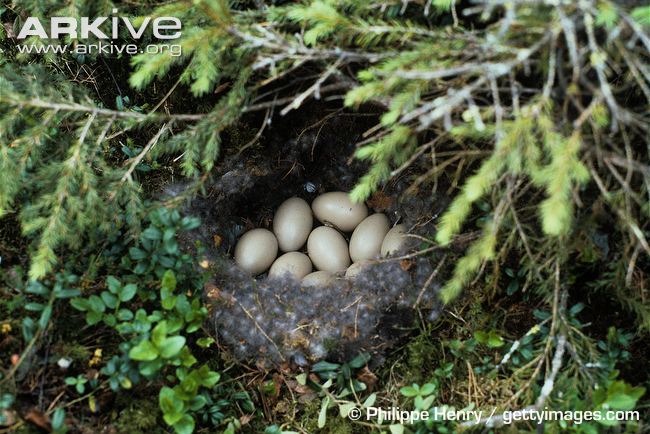
Eggs look like this |
|
Photo taken from: Philippe Henry / gettyimages.com |



.png)


|
|
Sources Used To Construct This Page |
|||
|
Titman, R. D. 1999. Red-breasted Merganser (Mergus serrator). In The Birds of North America, No. 443 (A. Poole and F. Gill, eds.). The Birds of North America, Inc., Philadelphia, PA. |
||||
 |
 |
 |
 |
|
| All photos and videos © Rick Swartzentrover - Free for non-profit use. | ||||