|
|
|
 |
Hermit Thrush
|
| Catharus guttatus | |
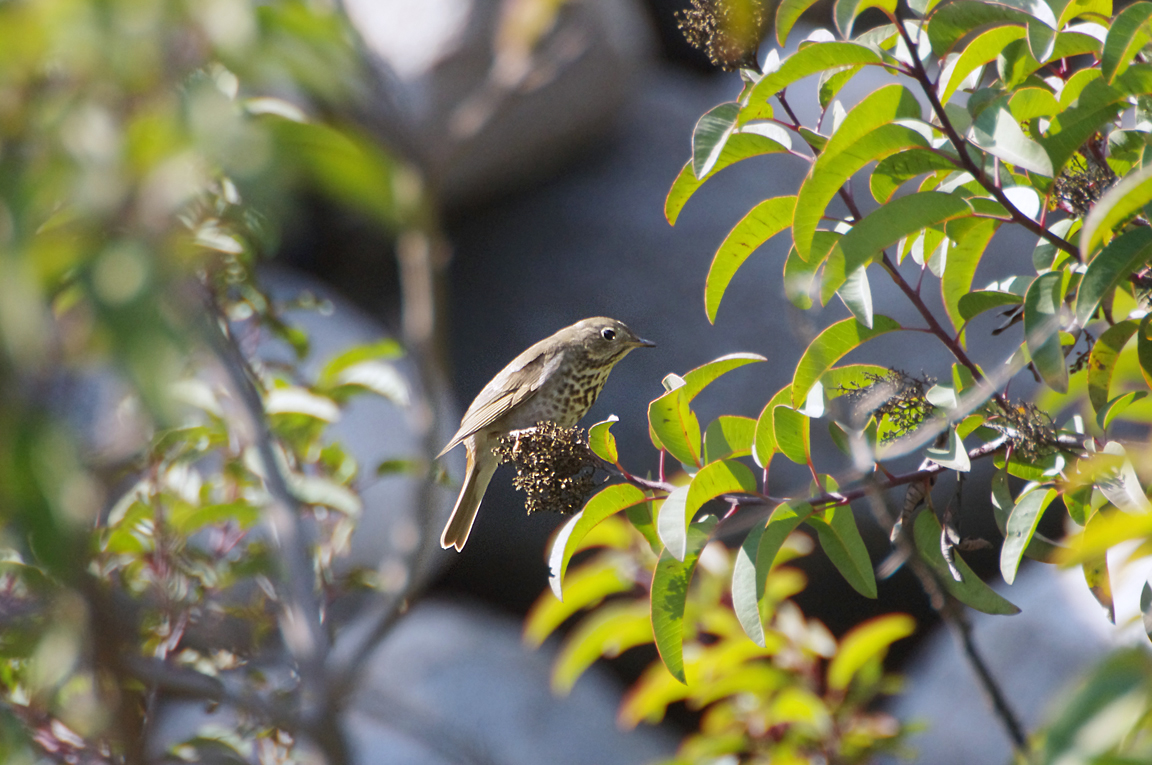
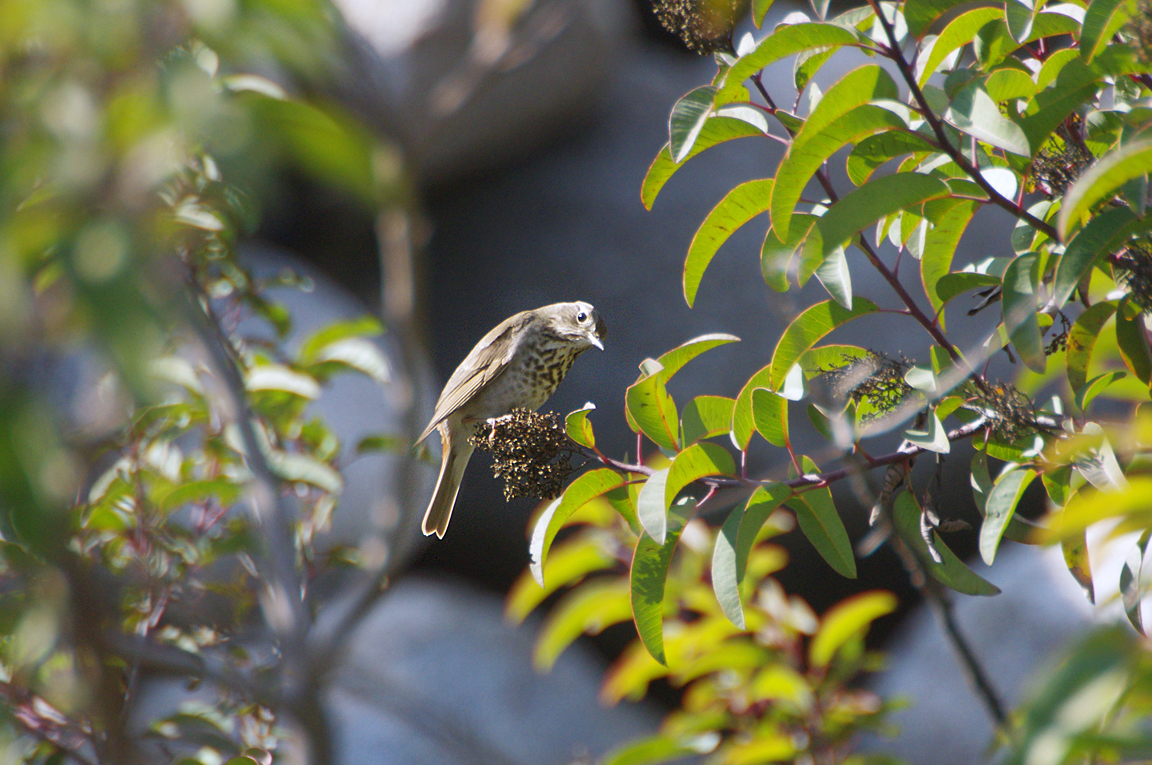
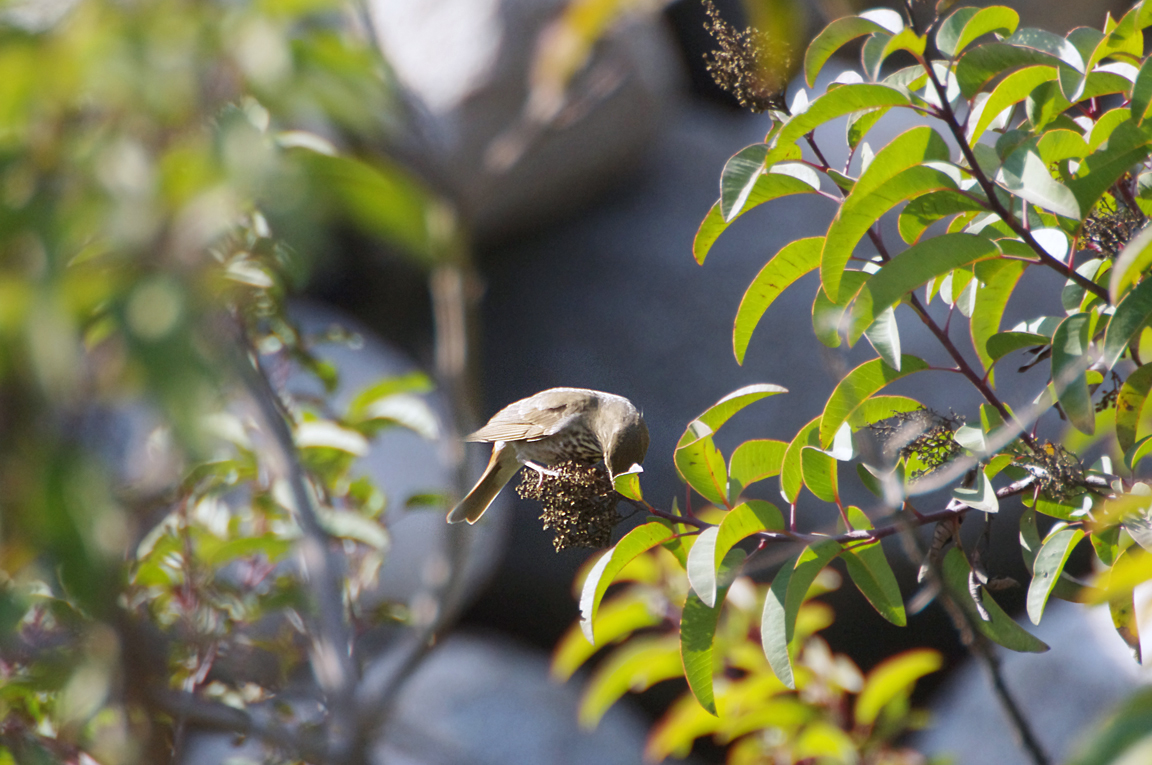
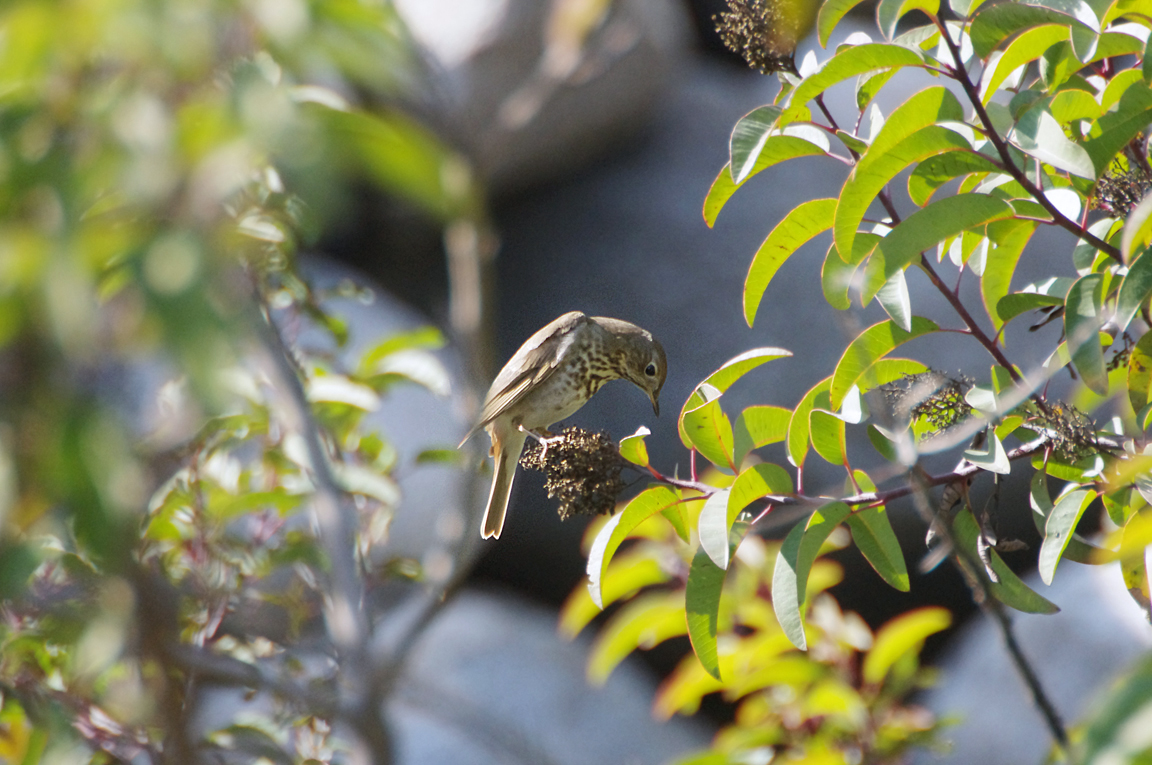
The Hermit Thrush is the only member of its genus to spend the winter in North America. It changes its diet from eating nearly entirely insects in summer to one of equal parts insects and fruit in winter.
Interesting Information
-
In the Appalachian Mountains the Hermit Thrush is displaced at lower elevations by the Veery and at higher elevations by Swainson's Thrush, leaving the middle altitudes for the Hermit Thrush.
-
East of the Rocky Mountains the Hermit Thrush usually nests on the ground. In the West, it is more likely to nest in trees.
Description
Adult Description
-
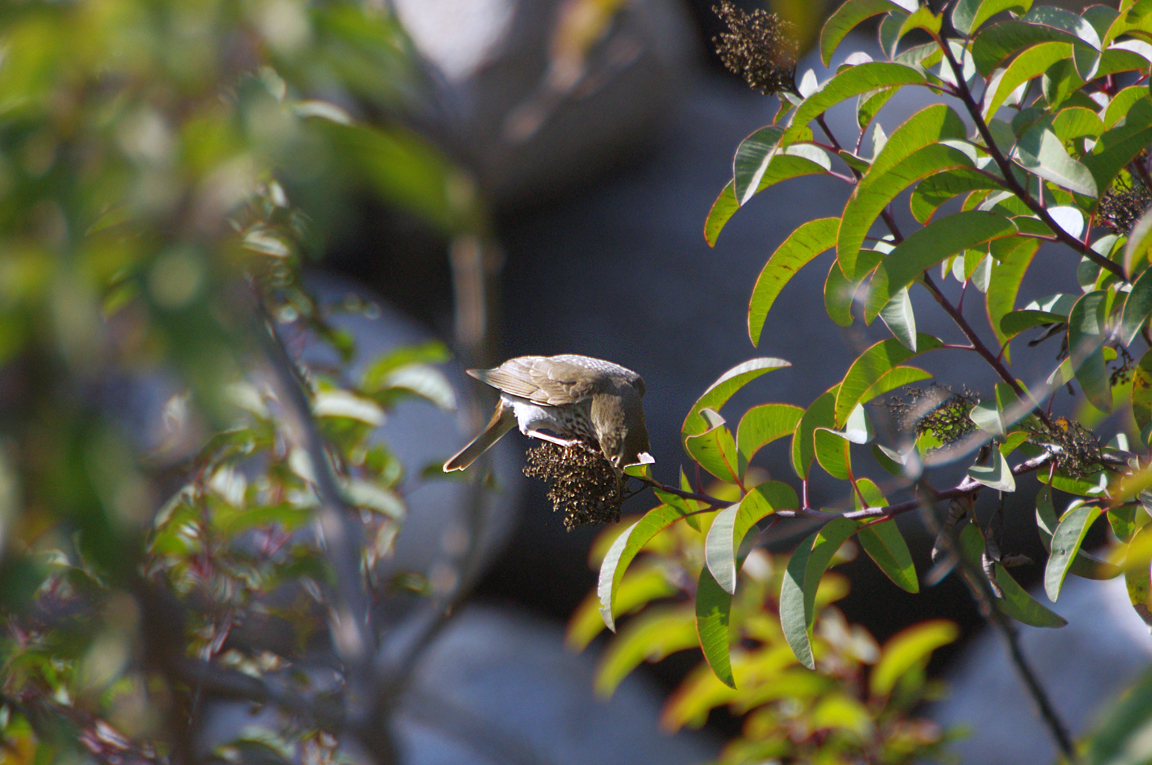
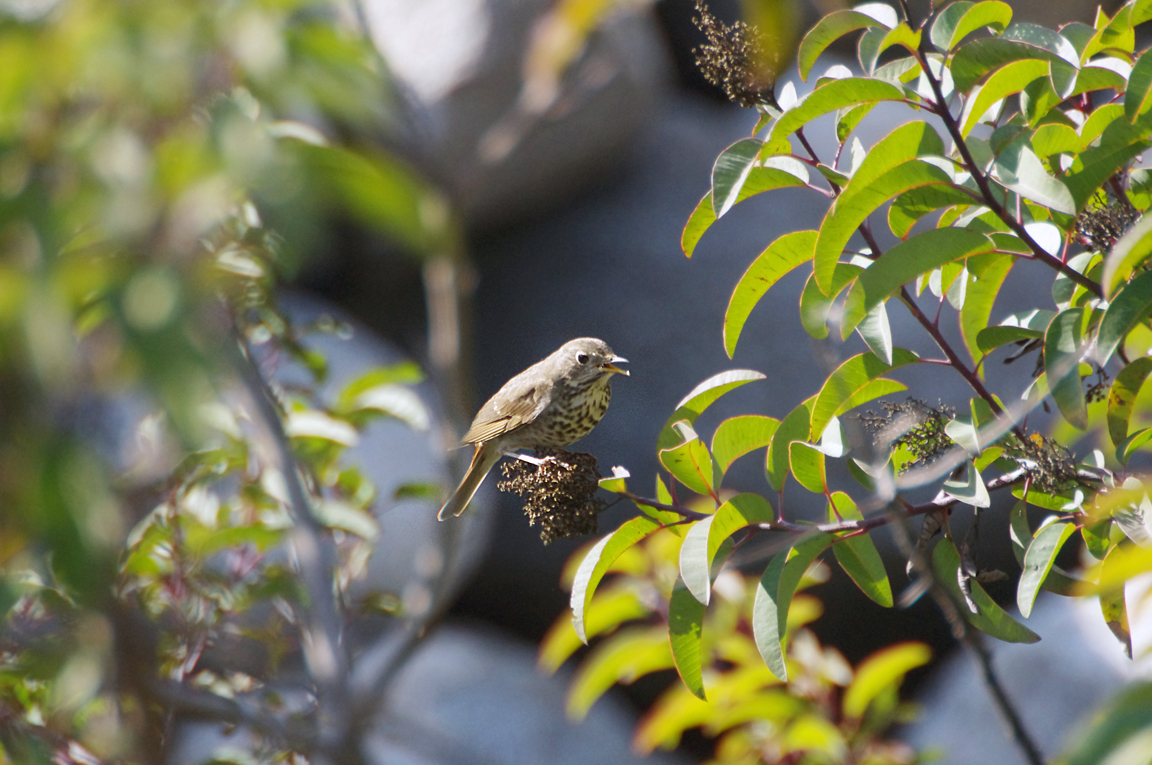
Medium-sized thrush.
-
Brown back, reddish tail.
-
Black spots on chest.
-
Thin white eyering.
-
Cocks tail up and flicks wings frequently; lifts tail up quickly, lowers it slowly.
-
Length Range: 17 cm (6.75 in)
-
Weight: 31 g (1.1 oz)
-
Size: Small (5 - 9 in)
Sex Differences
Sexes Similar
Immature
Similar to adults
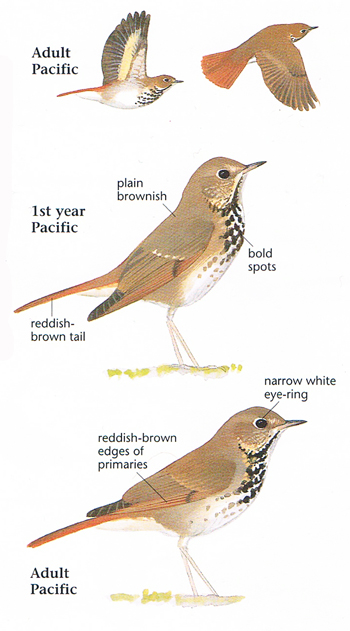
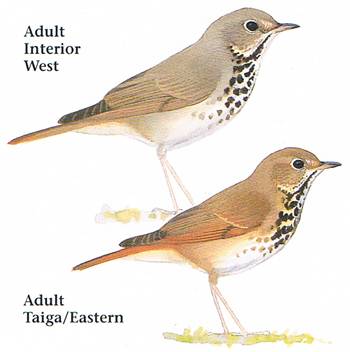
Photo taken from: The Sibley Field Guide by David Allen Sibley
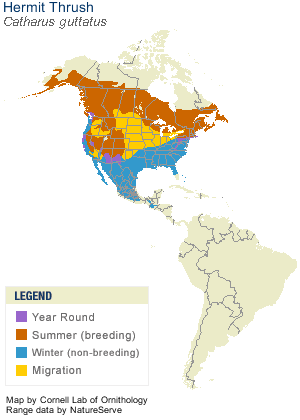
© 2003 Cornell Lab of Ornithology
|
Habitat |
|
|
Behavior |
|
Forages on ground by watching for movement, and by digging in leaf litter. |
|
Food |
|
Insects and other arthropods, fruit. |
Taxonomy
| Kingdom: | Animalia |
| Phylum: | Chordata |
| Subphylum: | Vertebrata |
| Class: | Aves |
| Order: | Passeriformes |
| Family: | Turdidae |
| Genus: | Catharus |
| Species: | Catharus guttatus |
| Subspecies: | Catharus guttatus auduboni |
| Catharus guttatus crymophilus | |
| Catharus guttatus faxoni | |
| Catharus guttatus guttatus | |
| Catharus guttatus nanus | |
| Catharus guttatus polionutus | |
| Catharus guttatus sequoiensis | |
| Catharus guttatus sleveni |
Similar Species |
|
|
Bird Sound |
|
Song a melodious, fluty warble, mostly on one pitch, starting with a clear whistled note. Call a low "chuck" and a high, harsh "screy." |
|
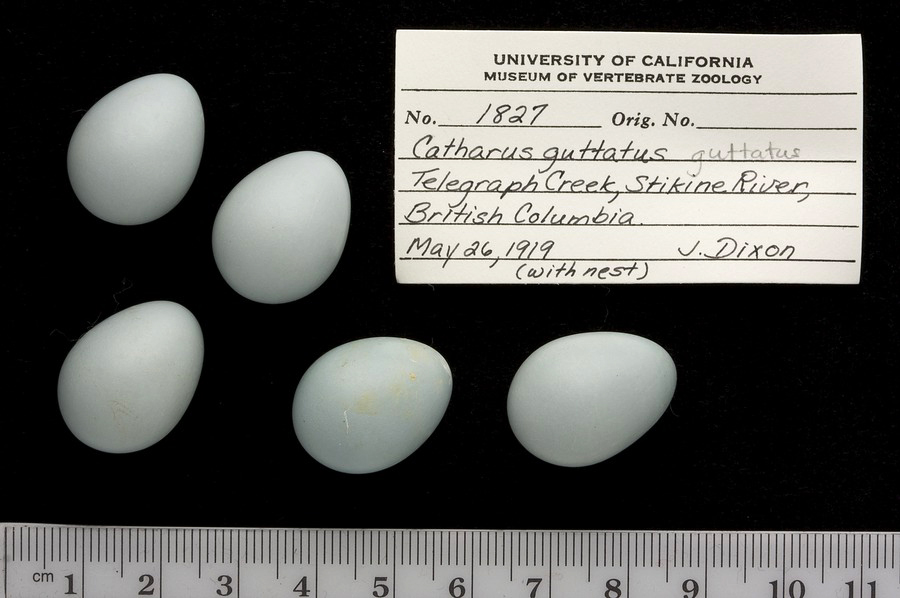
Eggs look like this |
|
Photo taken from: ARCTOS Collaborative Collection Management Solution |



.png)


|
|
Sources Used To Construct This Page |
|||
|
||||
 |
 |
 |
 |
|
| All photos and videos © Rick Swartzentrover - Free for non-profit use. | ||||