|
|
|
 |
California Quail
|
| Callipepla californica | |
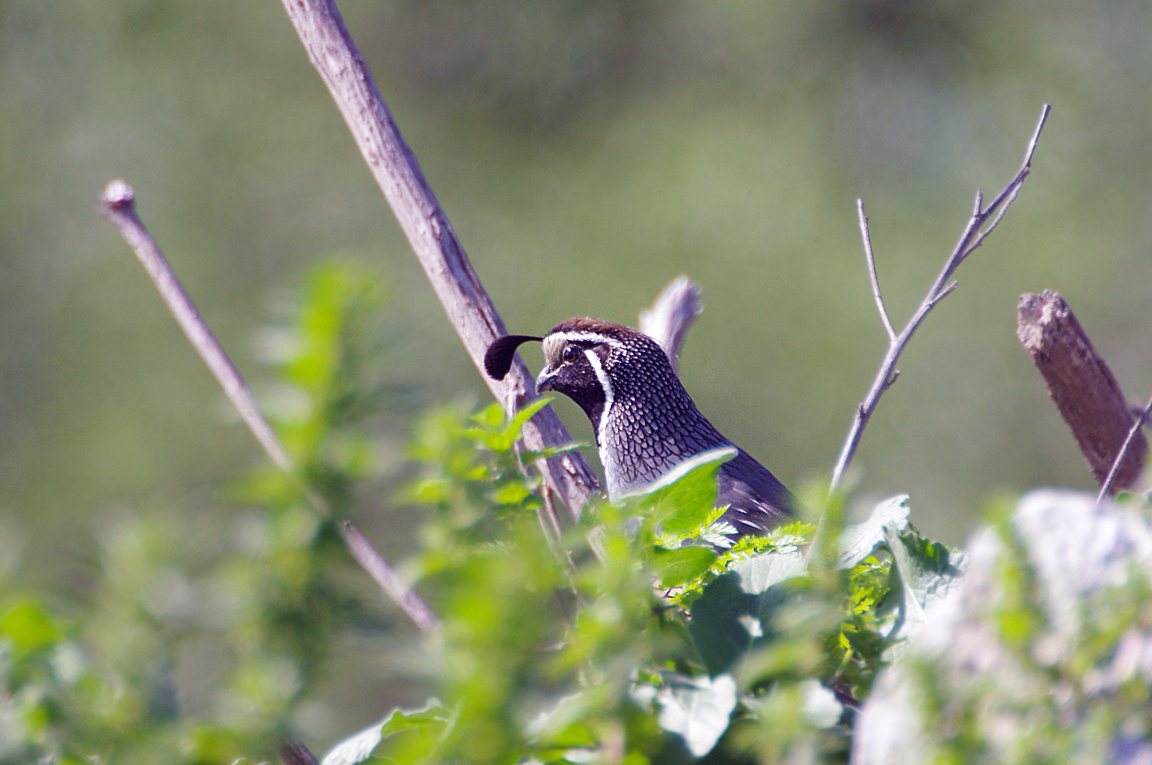
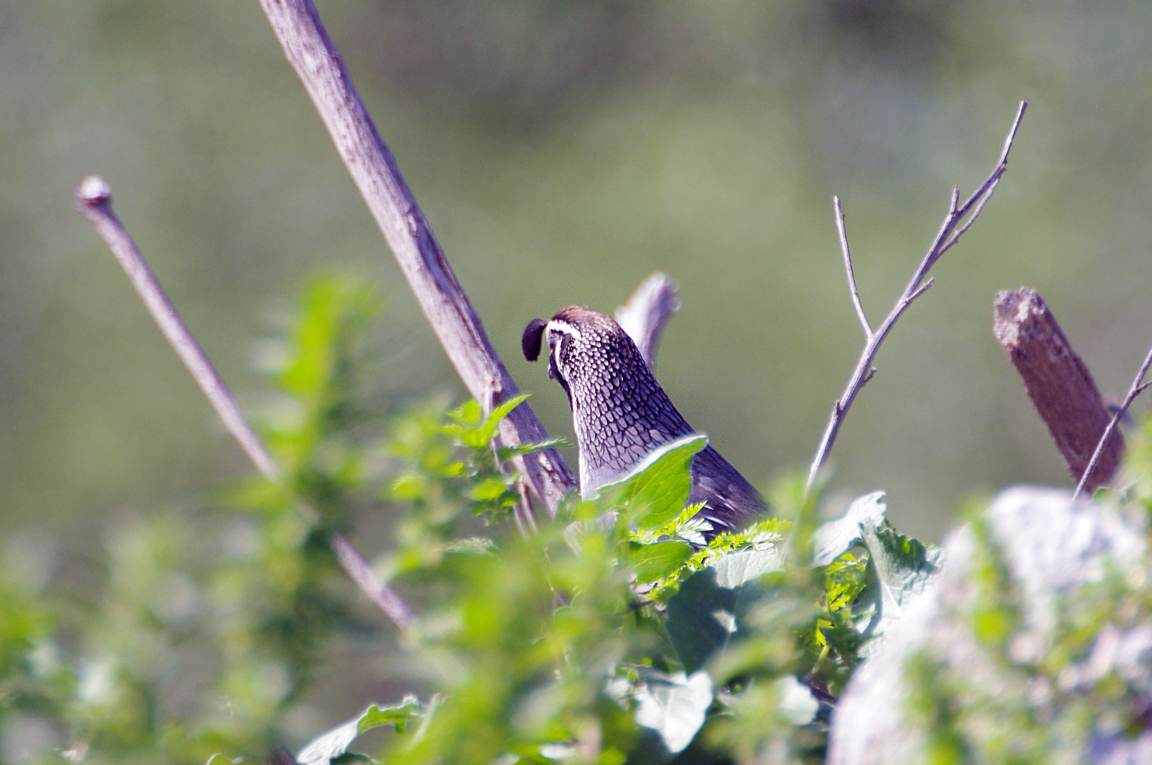
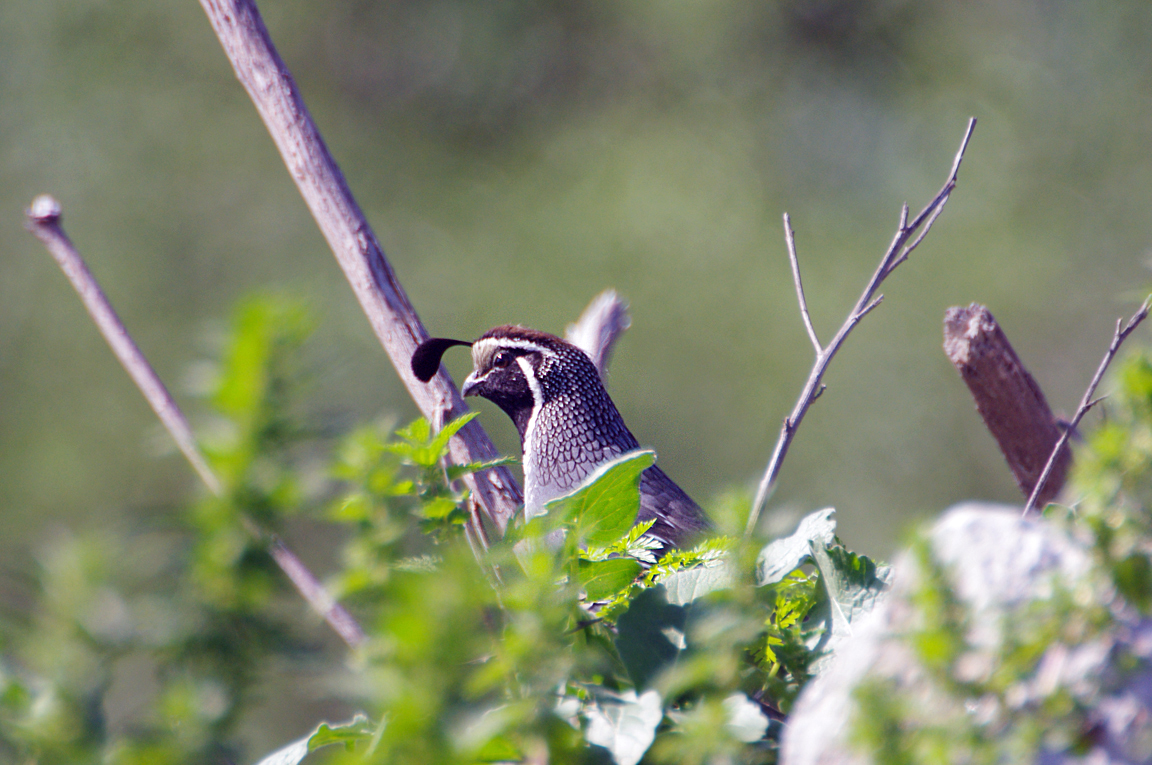
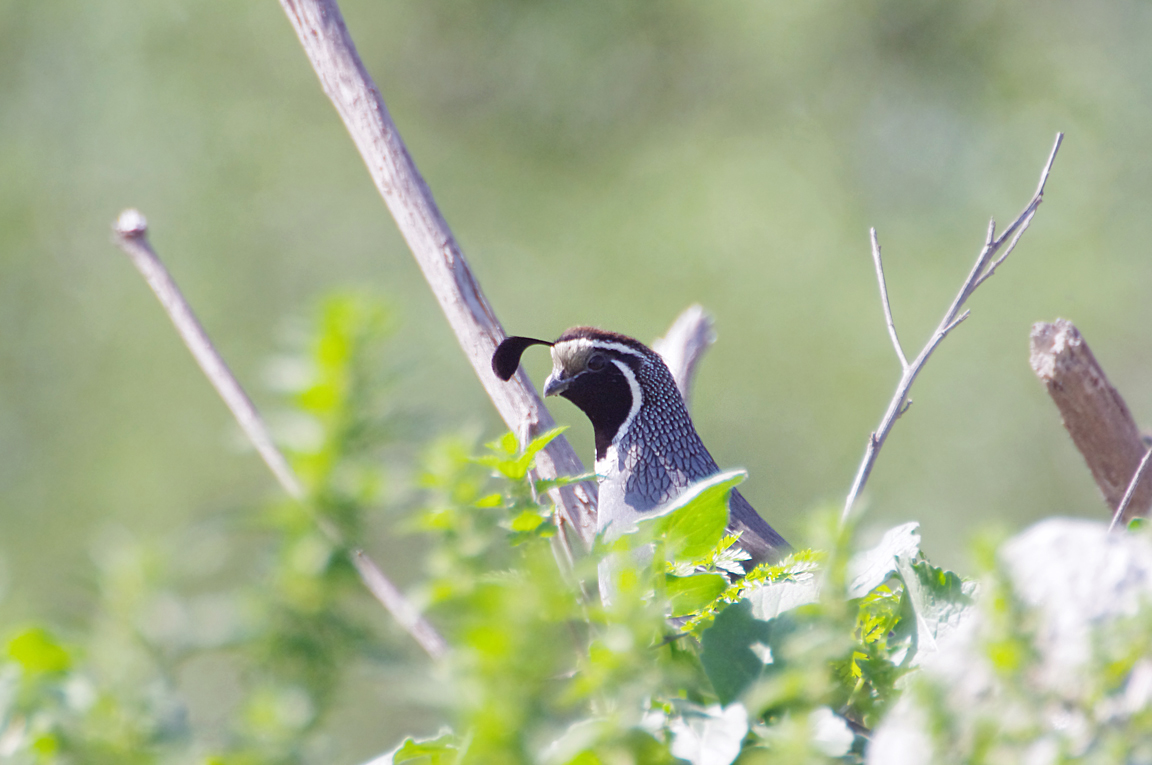
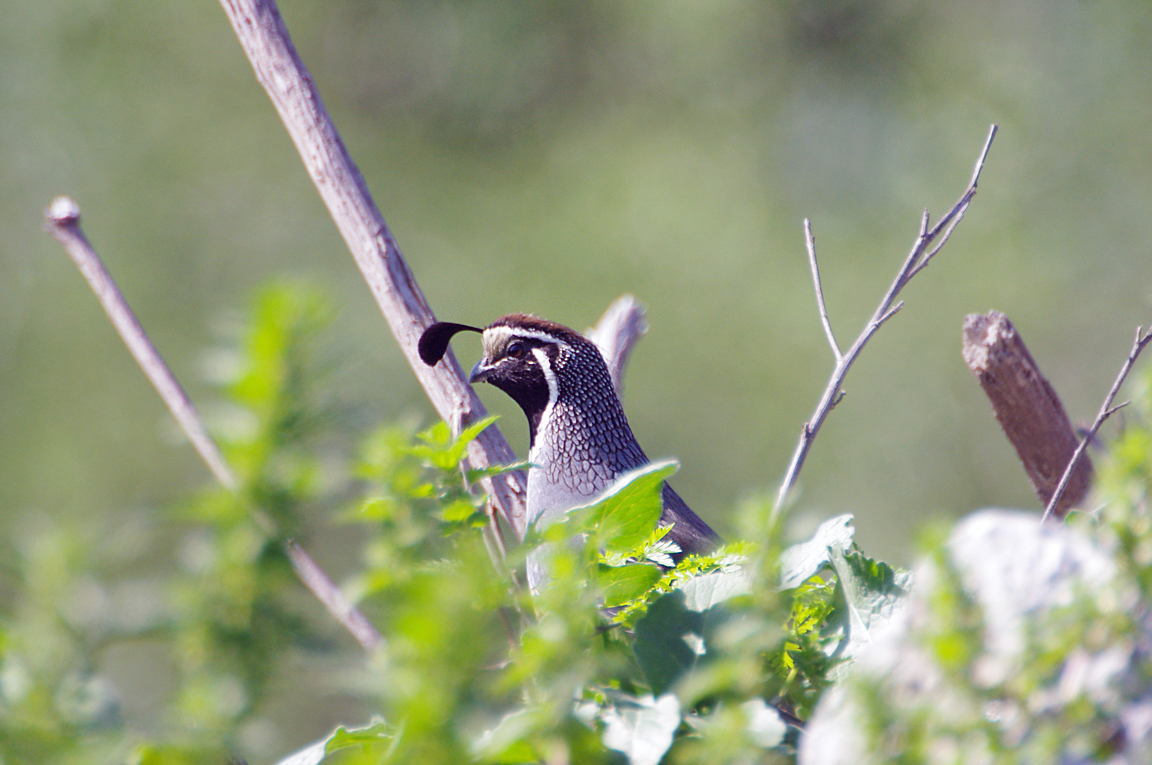
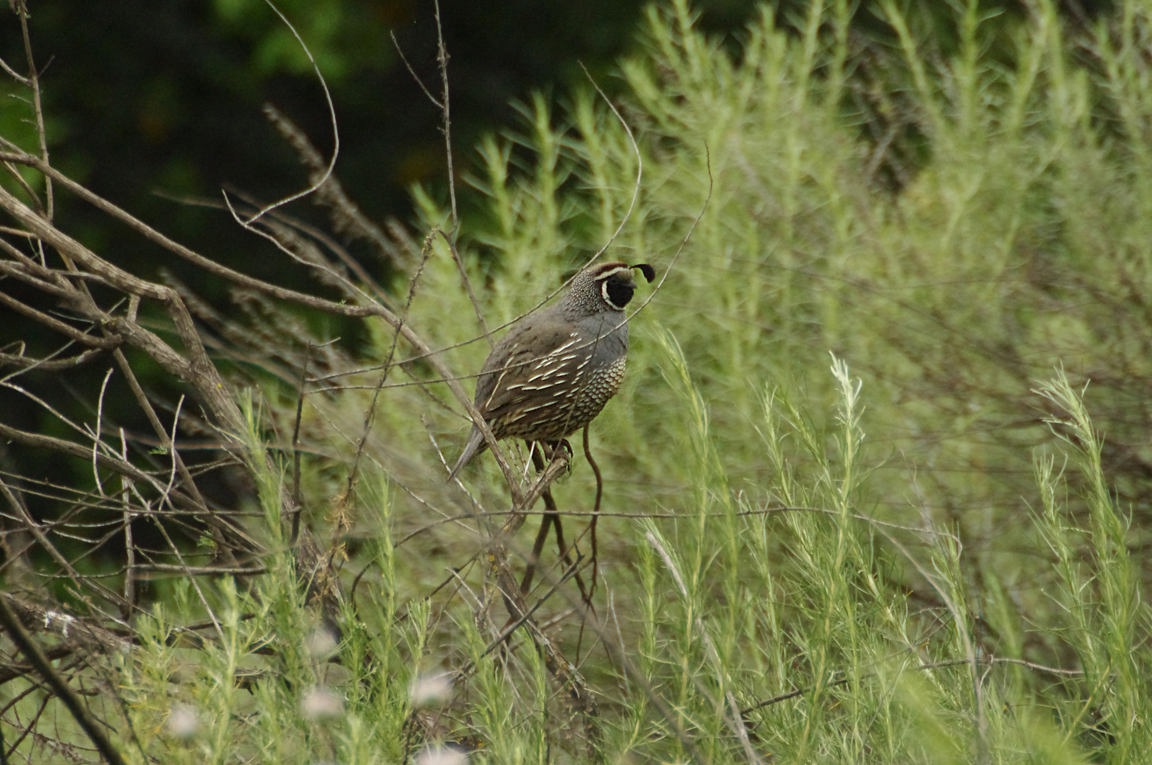
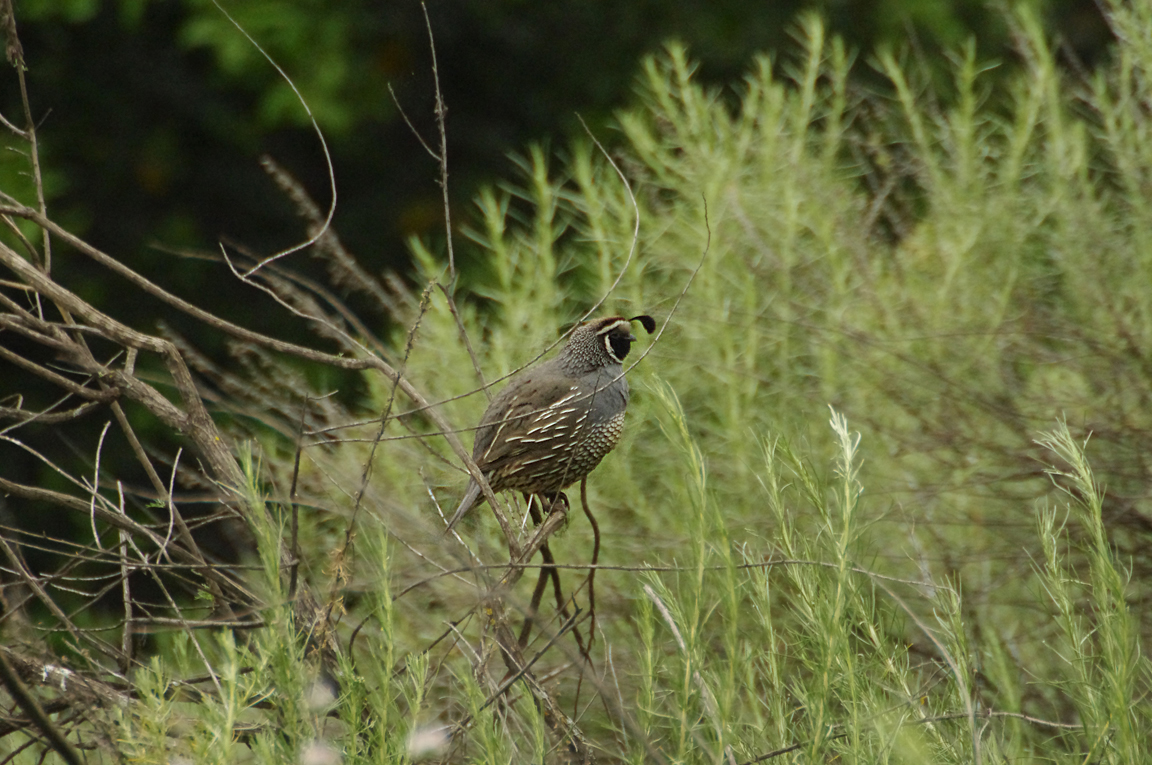
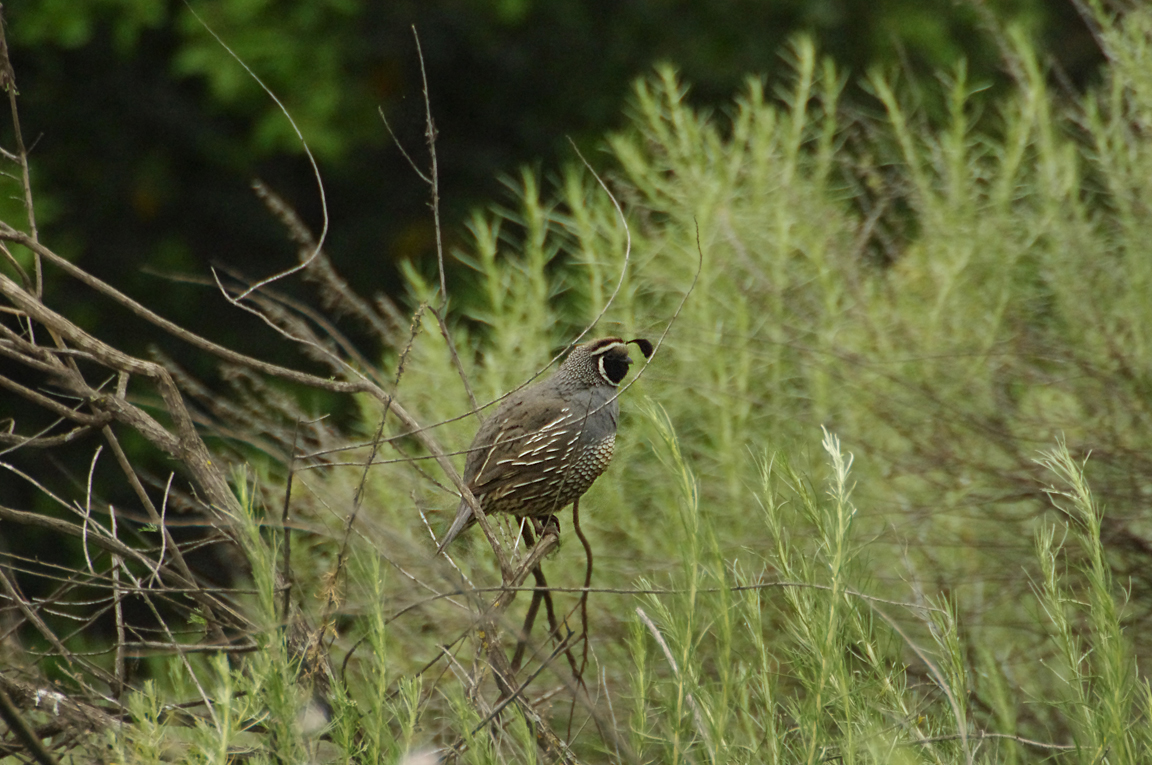
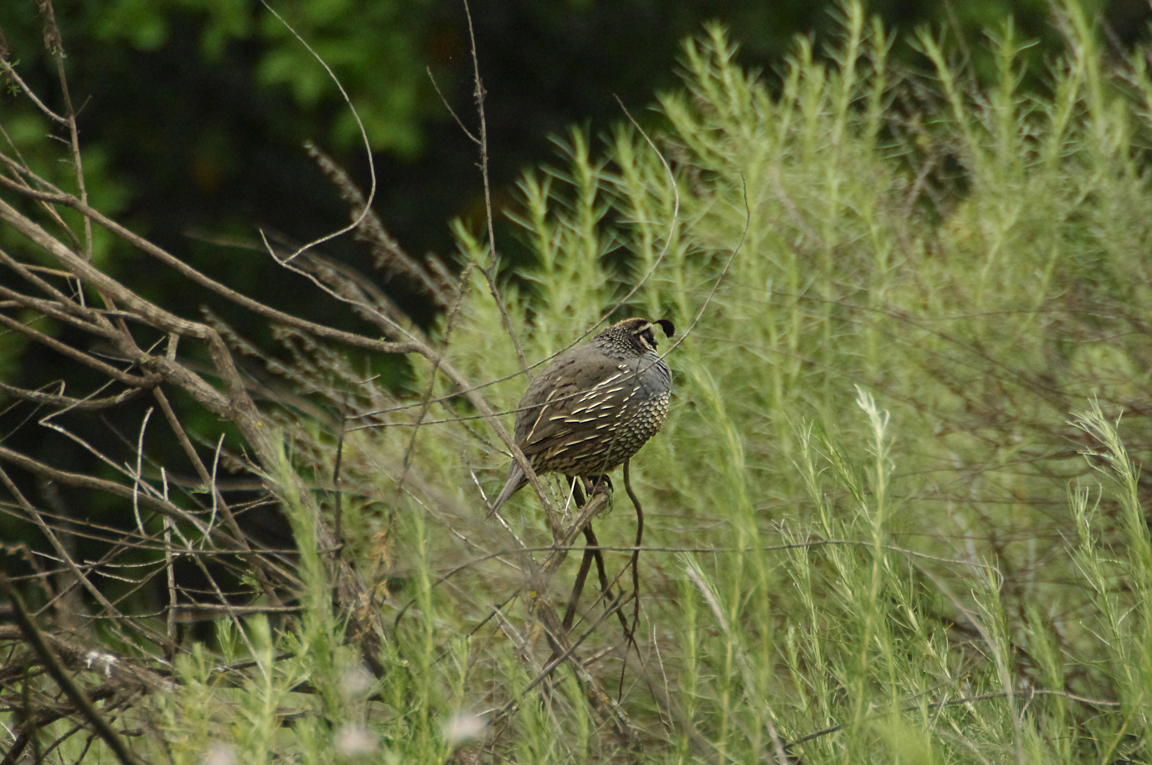
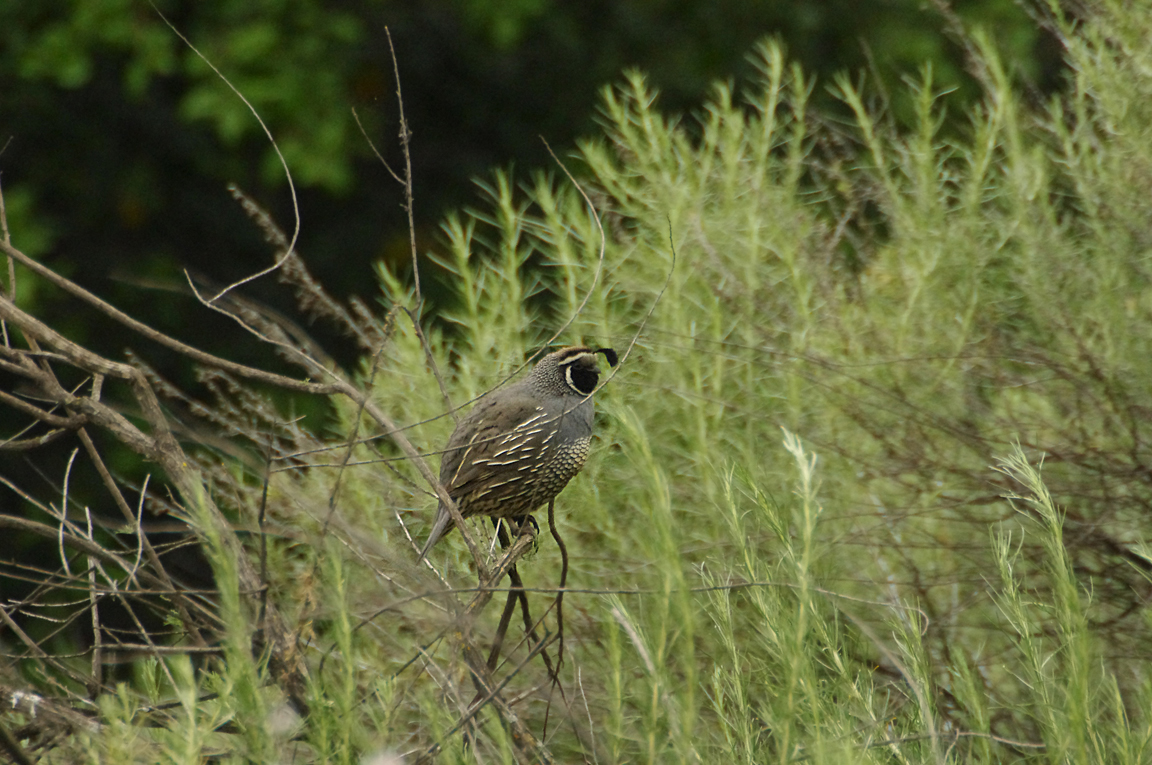
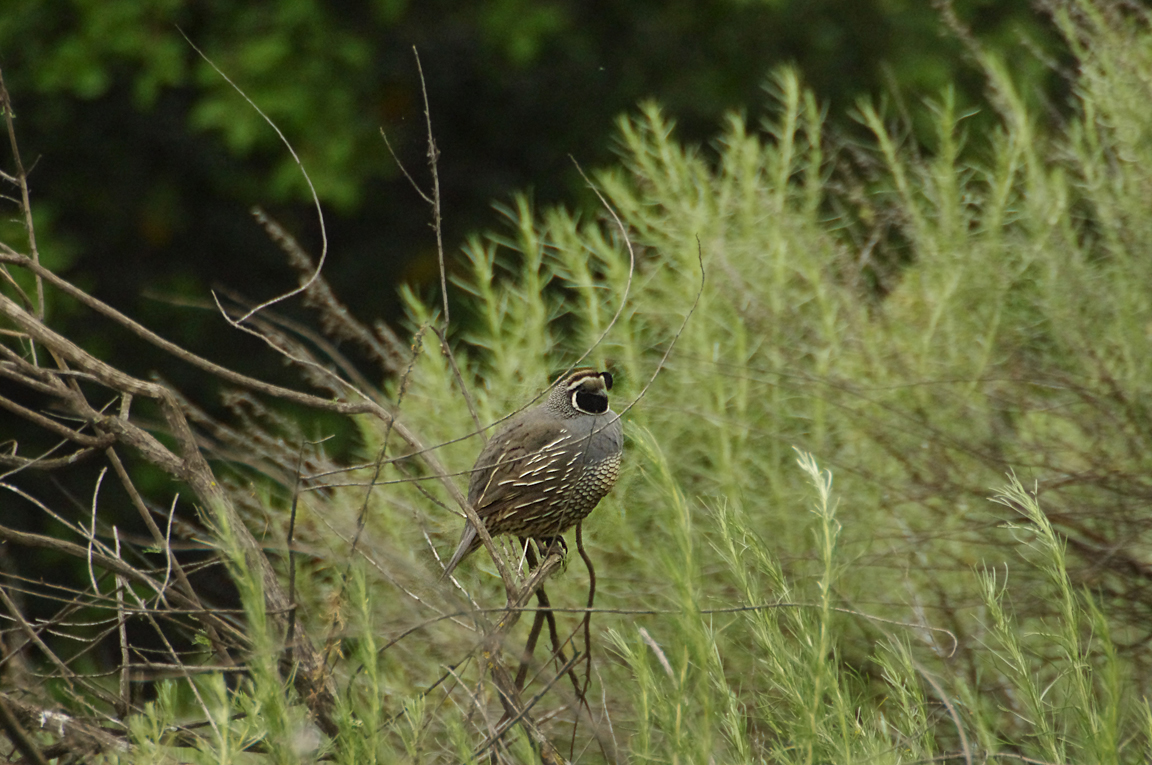
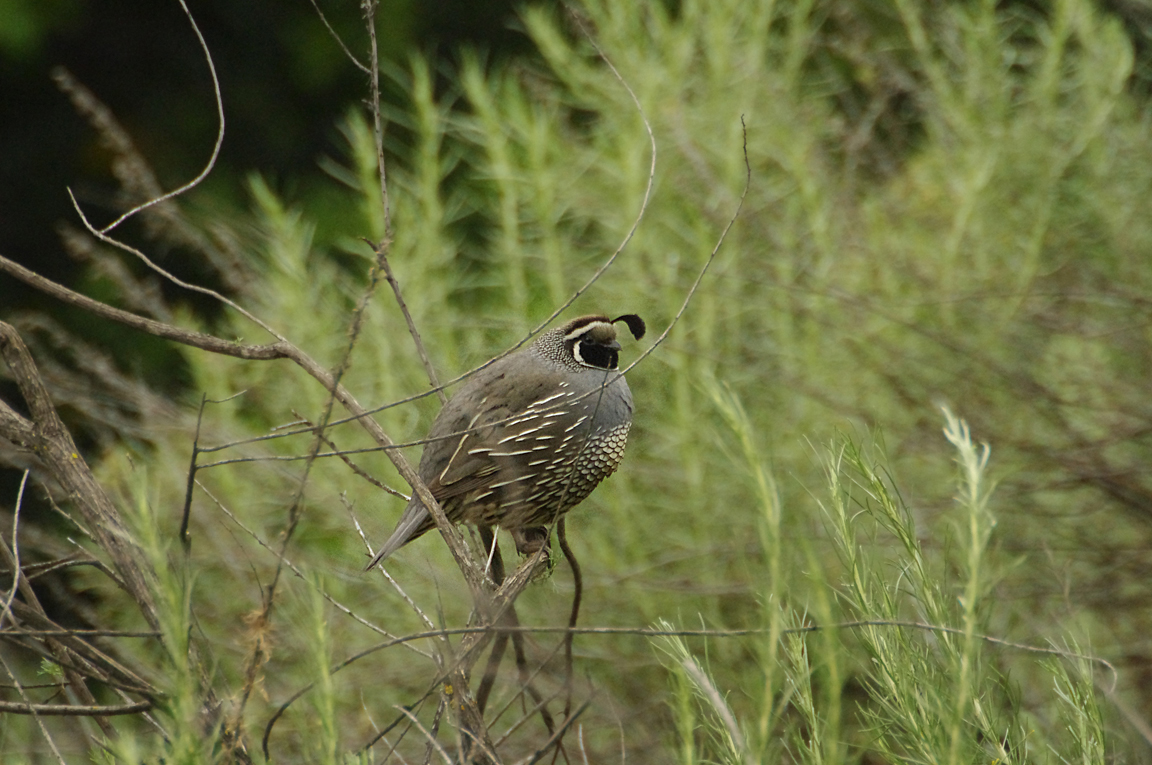
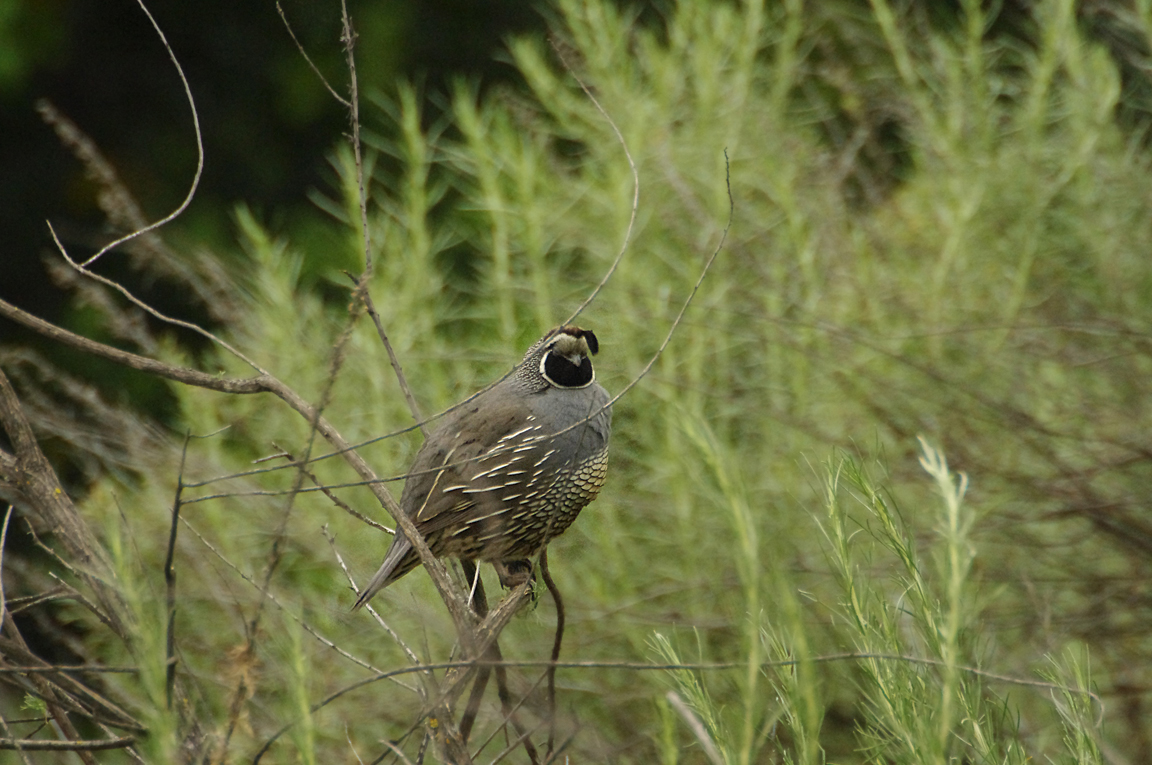
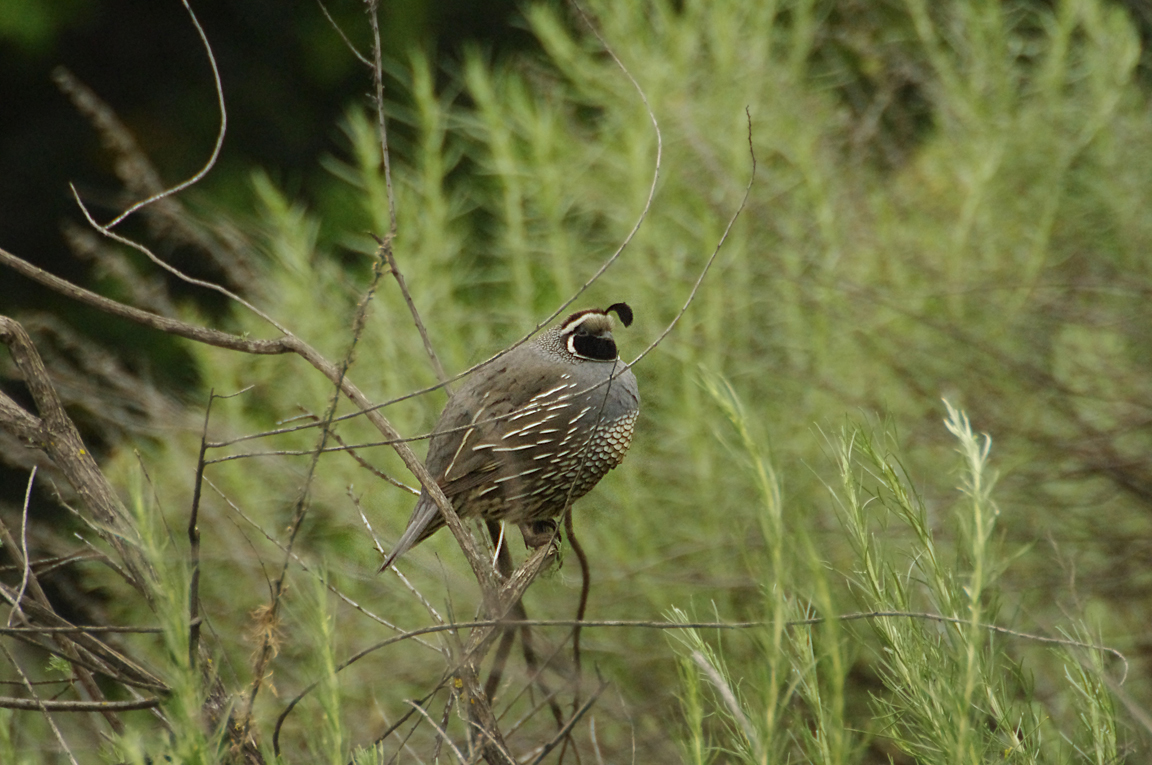
The California Quail is a handsome, round soccer ball of a bird with a rich gray breast, intricately scaled underparts, and a curious, forward-drooping head plume. Its stiffly accented Chi-ca-go call is a common sound of the chaparral and other brushy areas of California and the Northwest. Often seen scratching at the ground in large groups or dashing forward on blurred legs, California Quail are common but unobtrusive. They flush to cover if scared, so approach them gently.
Interesting Information
-
The California Quail digests vegetation with the help of protozoans in its intestine. Chicks acquire the protozoans by pecking at the feces of adults.
-
Several California Quail broods may mix after hatching, and all the parents care for the young. Adults that raise young this way tend to live longer than adults that do not.
-
Pairs of California Quail call antiphonally, meaning that the male and female alternate calls, fit them into a tightly orchestrated pattern.
-
The California Quail's head plume, or topknot, looks like a single feather, but it is actually a cluster of six overlapping feathers.
-
As an adaptation to living in arid environments, California Quails can often get by without water, acquiring their moisture from insects and succulent vegetation. During periods of sustained heat they must find drinking water to survive.
-
The California Quail is California's state bird and has had roles in several Walt Disney movies, including "Bambi."
-
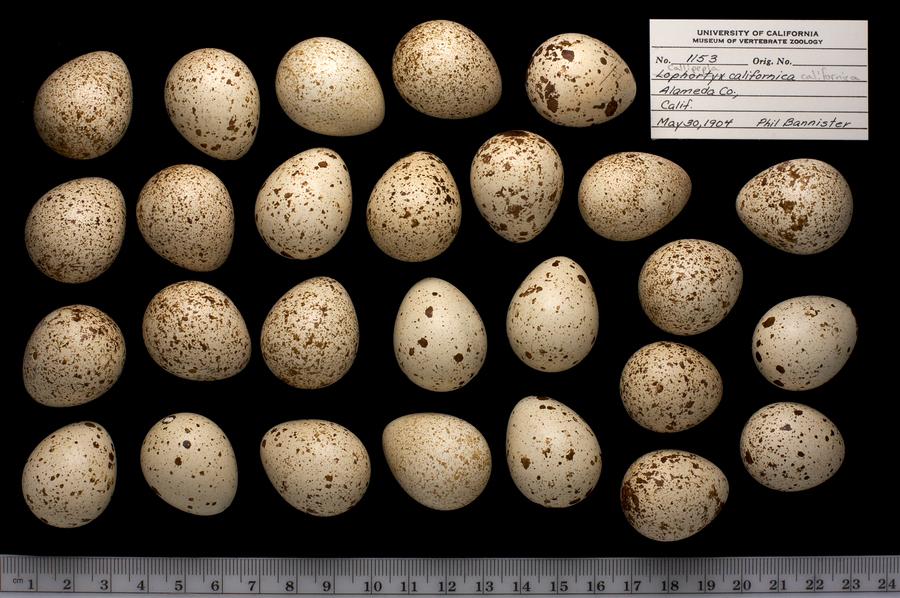
California Quail nests can contain as many as 28 eggs. These large clutches may be the result of females laying eggs in nests other than their own, a behavior known as "egg-dumping."
-
California Quail are pretty as well as popular with game hunters. They've been introduced to many other parts of the world, including Hawaii, Europe, and New Zealand.
-
The oldest known California Quail was 6 years 11 months old.
Description
Adult Description
California Quail are plump, short-necked game birds with a small head and bill. They fly on short, very broad wings. The tail is fairly long and square. Both sexes have a comma-shaped topknot of feathers projecting forward from the forehead, longer in males than females.
-
Length Range: 25 cm (10 in)
-
Weight: 232 g (8.2 oz)
-
Size: Medium (9 - 16 in)
-
Color Primary: Gray
-
Underparts: Gray breast, red-brown and buff scaled belly.
-
Upperparts: Gray and brown.
-
Back Pattern: Solid
-
Belly Pattern: Scaled or Scalloped
-
Breast Pattern: Solid
Sex Differences
Adult males are rich gray and brown, with a black face outlined with bold white stripes. Females are a plainer brown and lack the facial markings. Both sexes have a pattern of white, creamy, and chestnut scales on the belly. Young birds look like females but have a shorter topknot.
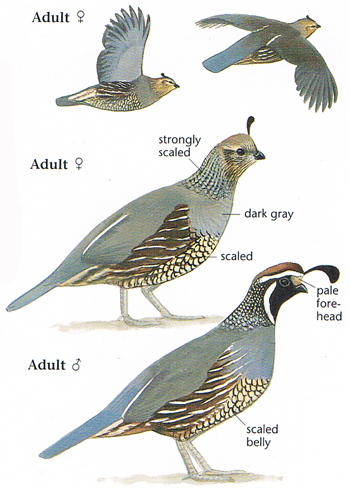
Photo taken from: The Sibley Field Guide by David Allen Sibley
© 2003 Cornell Lab of Ornithology
|
Habitat |
|
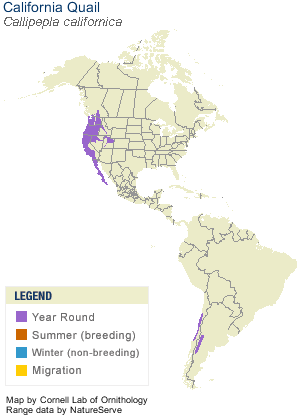
California Quail are characteristic birds of coastal sagebrush, chaparral, foothills, and high desert of California and the northwestern United States. They're also frequent visitors to backyards, especially if there's birdseed available at ground level. |
|
Behavior |
|
You'll normally see California Quail walking, running, or scratching at the ground and leaf litter for seeds and other food. They occasionally forage in trees. California Quail generally forage in open areas but stay close to cover. When running, they can move amazingly quickly despite their short legs. If pressed by a predator they will burst into flight with rapid, whirring wingbeats. California Quail form flocks known as coveys in fall and winter; these usually contain family groups and can number more than 75 individuals. They roost in trees and feed mainly in the morning and evening, spending most of the day in shrubs that shade them from the sun and protect them from predators. |
|
Food |
|
Mainly a seedeater; also eats leaves, flowers, catkins, grain, manzanita and poison oak berries, acorns, and invertebrates such as caterpillars, beetles, mites, millipedes, and snails. Diet is typically about 70 percent vegetarian. |
Taxonomy
| Kingdom: | Animalia |
| Phylum: | Chordata |
| Subphylum: | Vertebrata |
| Class: | Aves |
| Order: | Galliformes |
| Family: | Odontophoridae |
| Genus: | Callipepla |
| Species: | Callipepla californica |
| Subspecies: | Callipepla californica achrustera |
| Callipepla californica brunnescens | |
| Callipepla californica californica | |
| Callipepla californica canfieldae | |
| Callipepla californica catalinensis |
Similar Species |
|
|
Bird Sound |
|
The California Quail's main call consists of three syllables and sounds like the bird is saying Chi-ca-go. It's usually given when an individual is separated from its group or mate, as well as while a covey is on the move or preparing to move. The call lasts about 1 second and can be given 10 times or more in succession. California Quail use a repeated pit-pit alarm call to alert covey members of nearby danger. Mated California Quail pairs call antiphonally: the male makes short, shrill notes in time with the female's Chi-ca-go call. |
|
Eggs look like this |
|
Photo taken from: ARCTOS Collaborative Collection Management Solution |



.png)


|
|
Sources Used To Construct This Page |
|||
|
Calkins, Jennifer D., Julie C. Hagelin and Dale F. Lott. 1999. California Quail (Callipepla californica), The Birds of North America Online (A. Poole, Ed.). Ithaca: Cornell Lab of Ornithology; Retrieved from the Birds of North America Online: |
||||
 |
 |
 |
 |
|
| All photos and videos © Rick Swartzentrover - Free for non-profit use. | ||||