|
|
|
 |
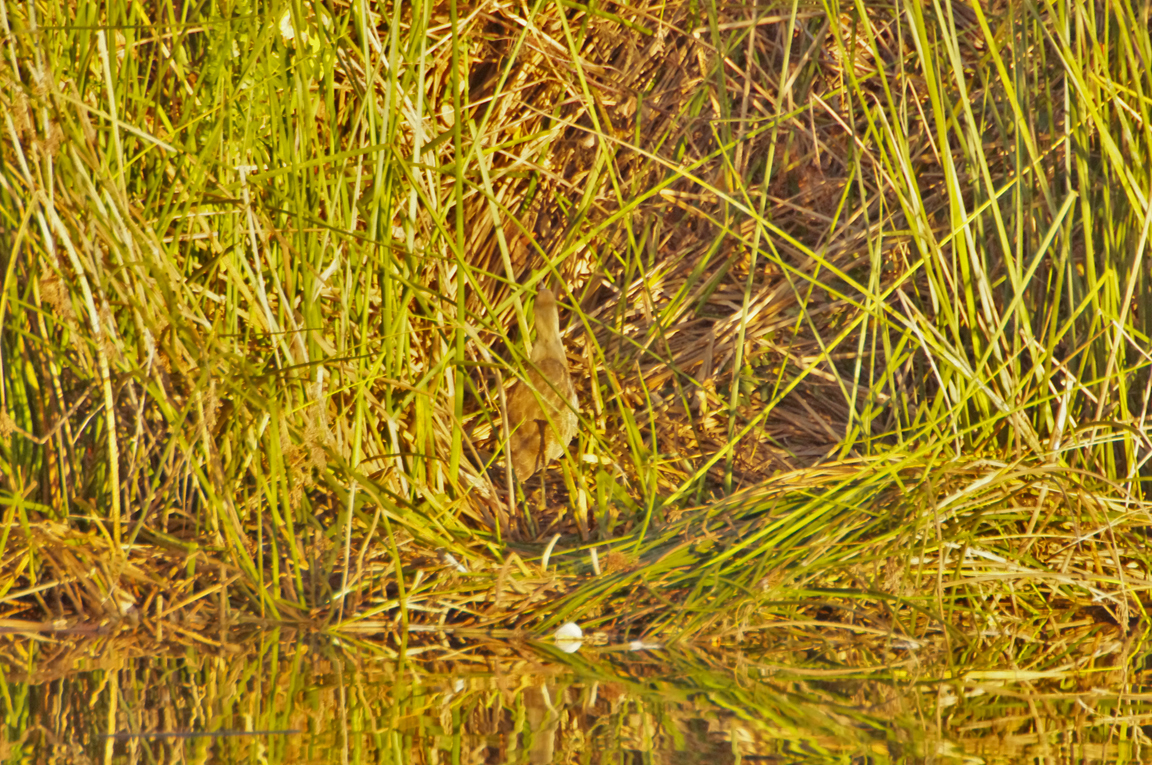
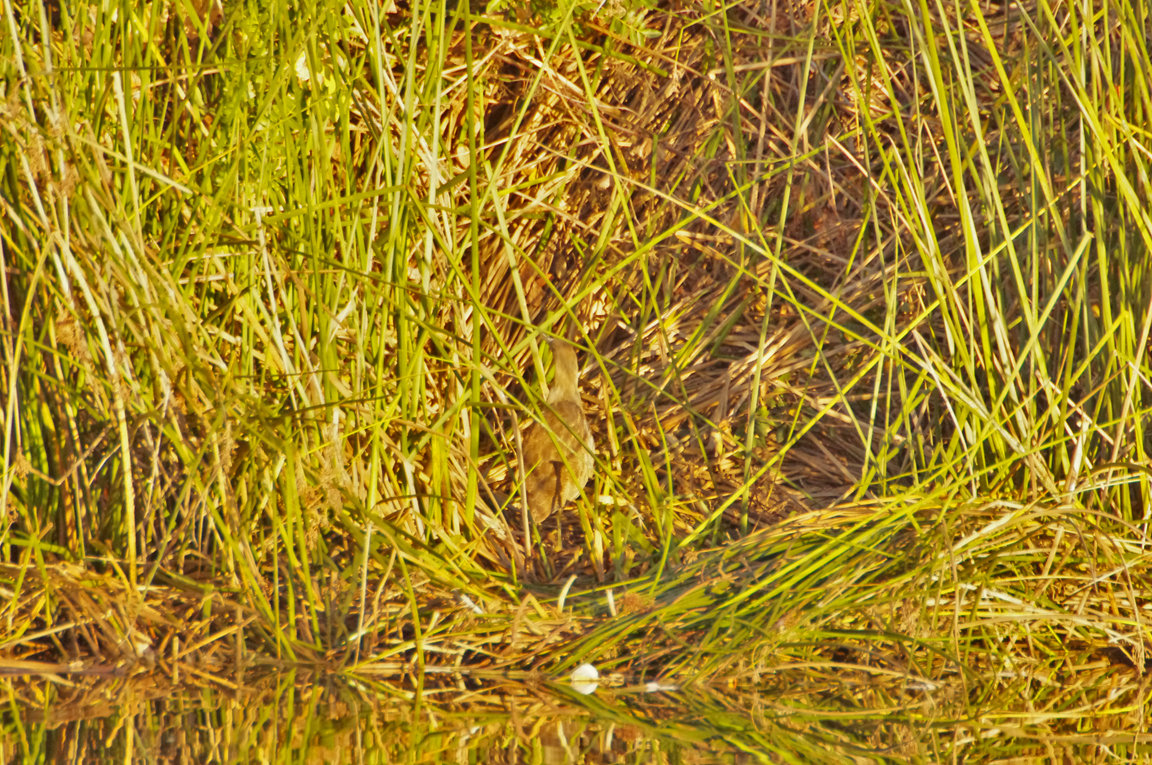
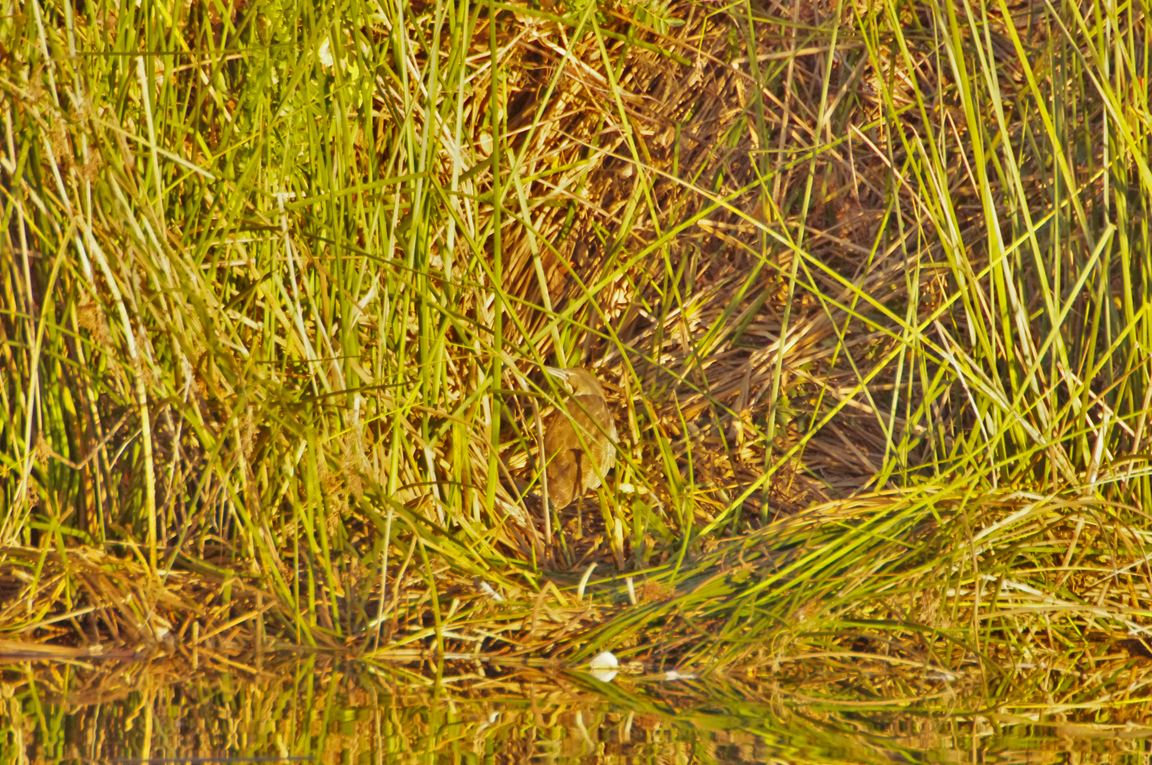
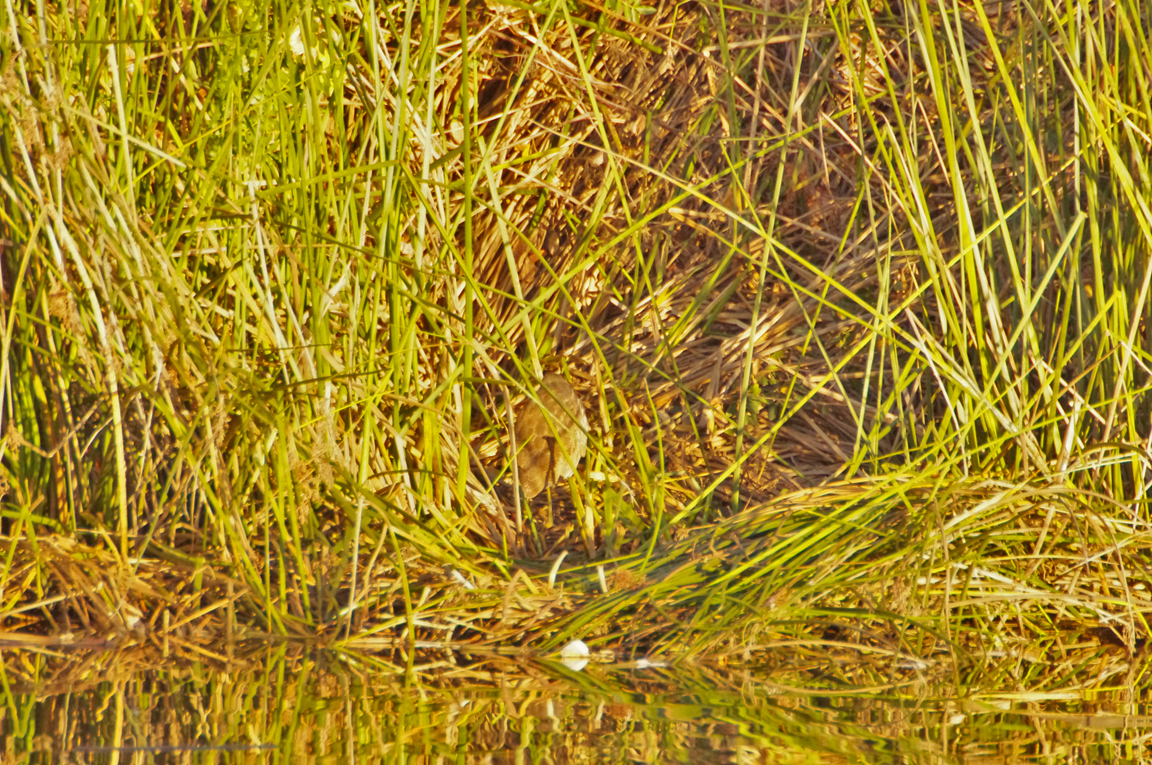
American Bittern
|
| Botaurus lentiginosus | |
A tiny heron, furtive and surpassingly well camouflaged, the Least Bittern is one of the most difficult North American marsh birds to spot. Despite its inconspicuousness, however, the species can be rather common within appropriate habitat in its breeding range.
Interesting Information
-
The American Bittern has a remarkable, though rarely seen, courtship display. The male arches his back, shortens his neck, dips his breast forward, and "booms" at the female. Both birds engage in complicated aerial displays.
-
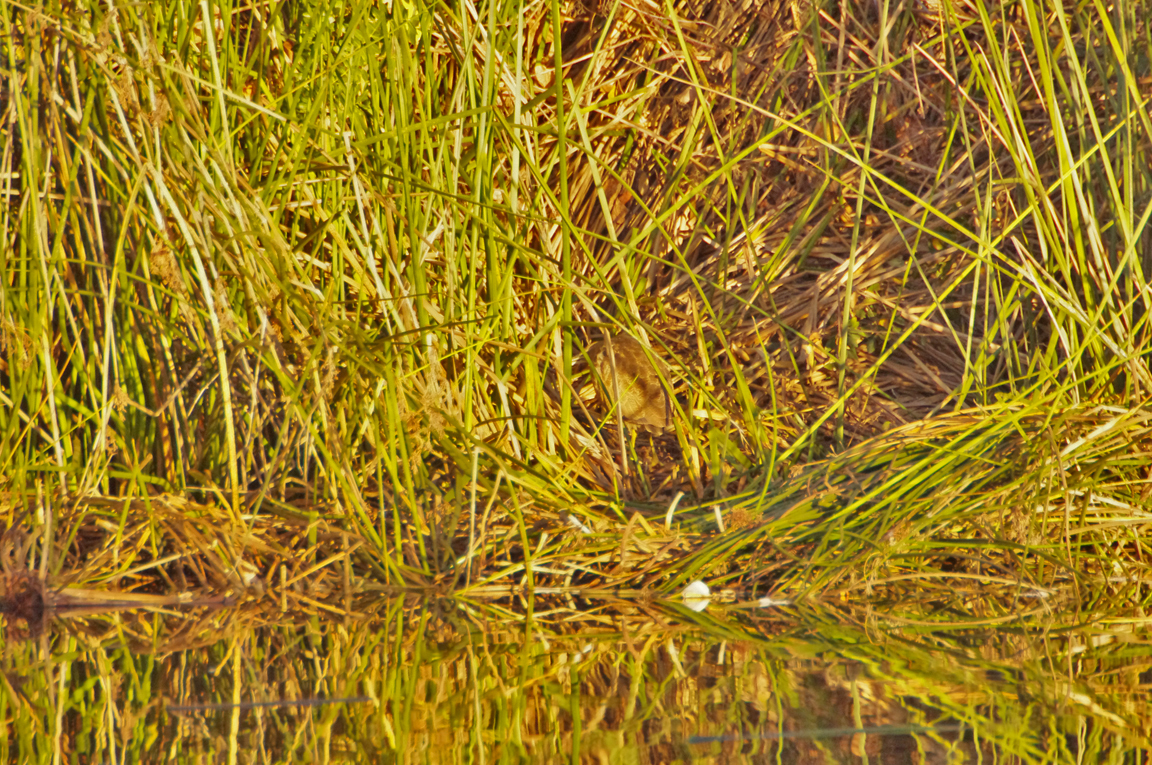
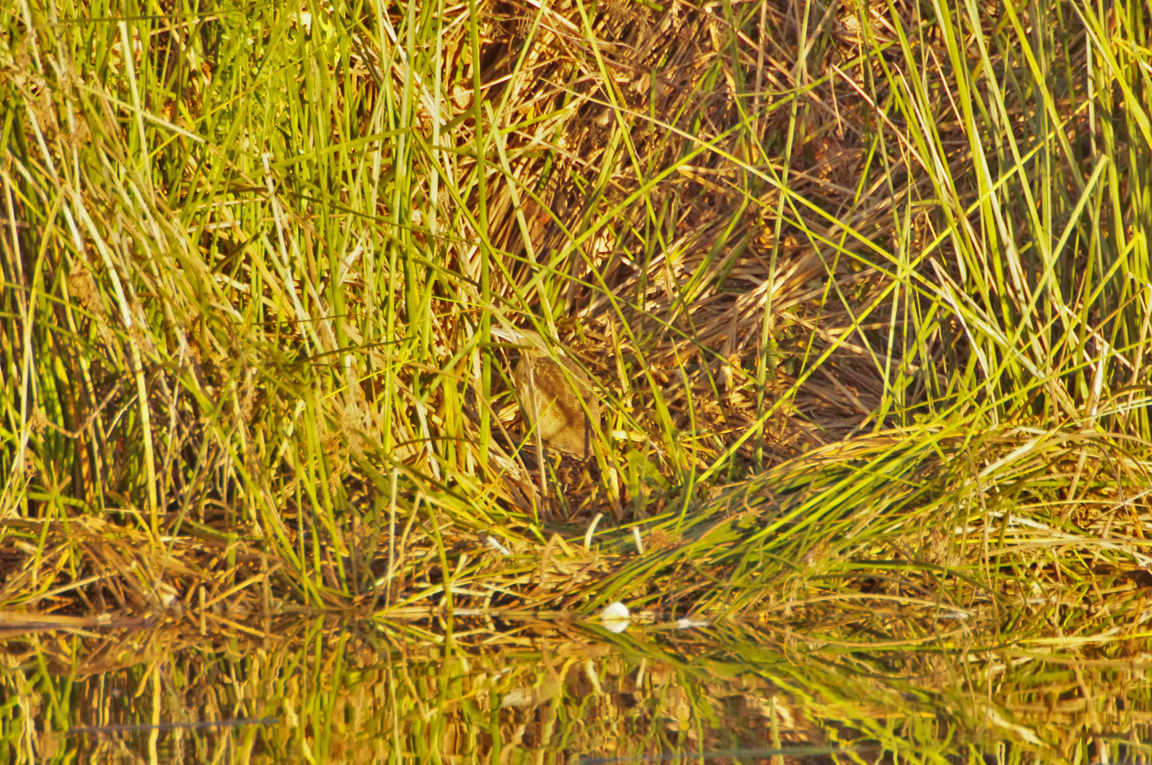
They prefer to freeze, not flush like other herons when approached. If an observer is nearby, they will often stretch their neck up, bill pointed towards the sky, and sway from side to side as if imitating waving reeds.
-
They use resounding calls to communicate. These eerie calls have earned them many nicknames: stake-driver, thunder-pumper, and mire-drum.
-
A group of bitterns has many collective nouns, including a "dash", "freeze", "pint", "pretense" and "siege" of bitterns.
Description
Adult Description
-
Medium-sized, stocky heron.
- Thick neck and bill.
- Colored in brown, tan, and white stripes.
- Length Range: 58 cm (23 in)
- Weight: 726 g (25.6 oz)
- Size: Large (16 - 32 in)
- Color Primary: Brown
- Underparts: Streaked brown and white.
- Upperparts: Streaked brown and buff.
- Back Pattern: Mottled
- Belly Pattern: Striped or streaked
- Breast Pattern: Striped or streaked
Sex Differences
Sexes similar.
Immature
Similar to adult.
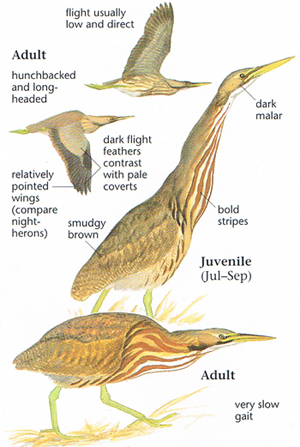
Photo taken from: The Sibley Field Guide by David Allen Sibley
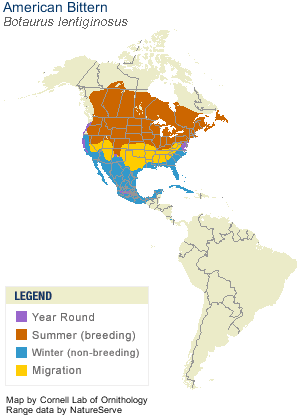
© 2003 Cornell Lab of Ornithology
|
Habitat |
|
Freshwater or brackish marshes with tall emergent vegetation. |
|
Behavior |
|
Stalks along reeds, sometimes next to rather deep water, or climbs on reed stalks, and strikes downward into water with bill. |
|
Food |
|
Small fish and insects. |
Taxonomy
| Kingdom: | Animalia |
| Phylum: | Chordata |
| Subphylum: | Vertebrata |
| Class: | Aves |
| Order: | Pelecaniformes |
| Family: | Ardeidae |
| Subfamily: | Botaurinae |
| Genus: | Botaurus |
| Species: | Botaurus lentiginosus |
Similar Species |
|
|
Bird Sound |
|
A deep pumping "oong-ka-choonk." |
|
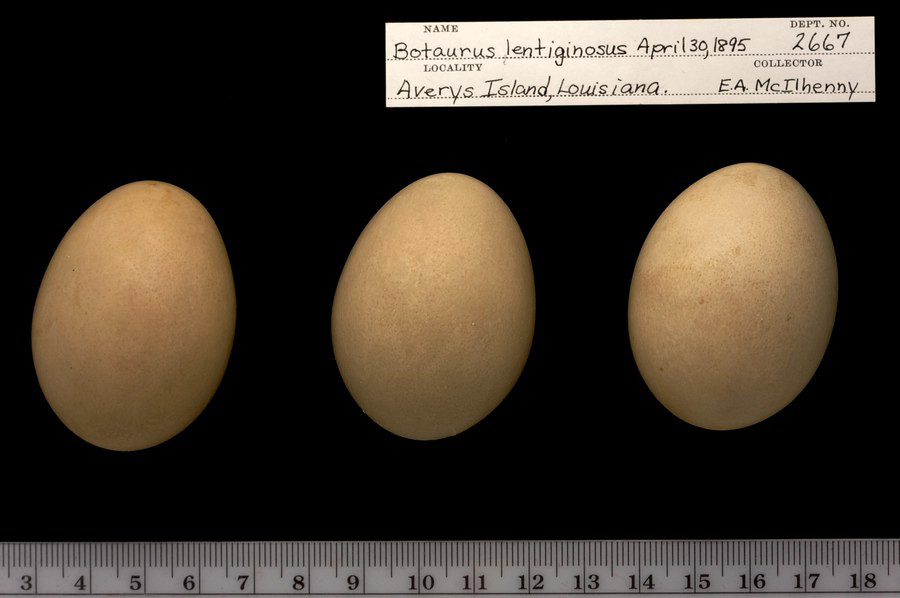
Eggs look like this |
|
Photo taken from: ARCTOS Collaborative Collection Management Solution |



.png)


|
|
Sources Used To Construct This Page |
|||
|
Gibbs, J. P. , S. Melvin, and F. A. Reid. 1992. American Bittern (Botaurus lentiginosus). In The Birds of North America, No. 18 (A. Poole, P. Stettenheim, and F. Gill, Eds.). Philadelphia: The Academy of Natural Sciences; Washington, DC: The American Ornithologists Union. |
||||
 |
 |
 |
 |
|
| All photos and videos © Rick Swartzentrover - Free for non-profit use. | ||||